


Best Rain Barrel for Your Home: Size, Features, Rules and Rebates
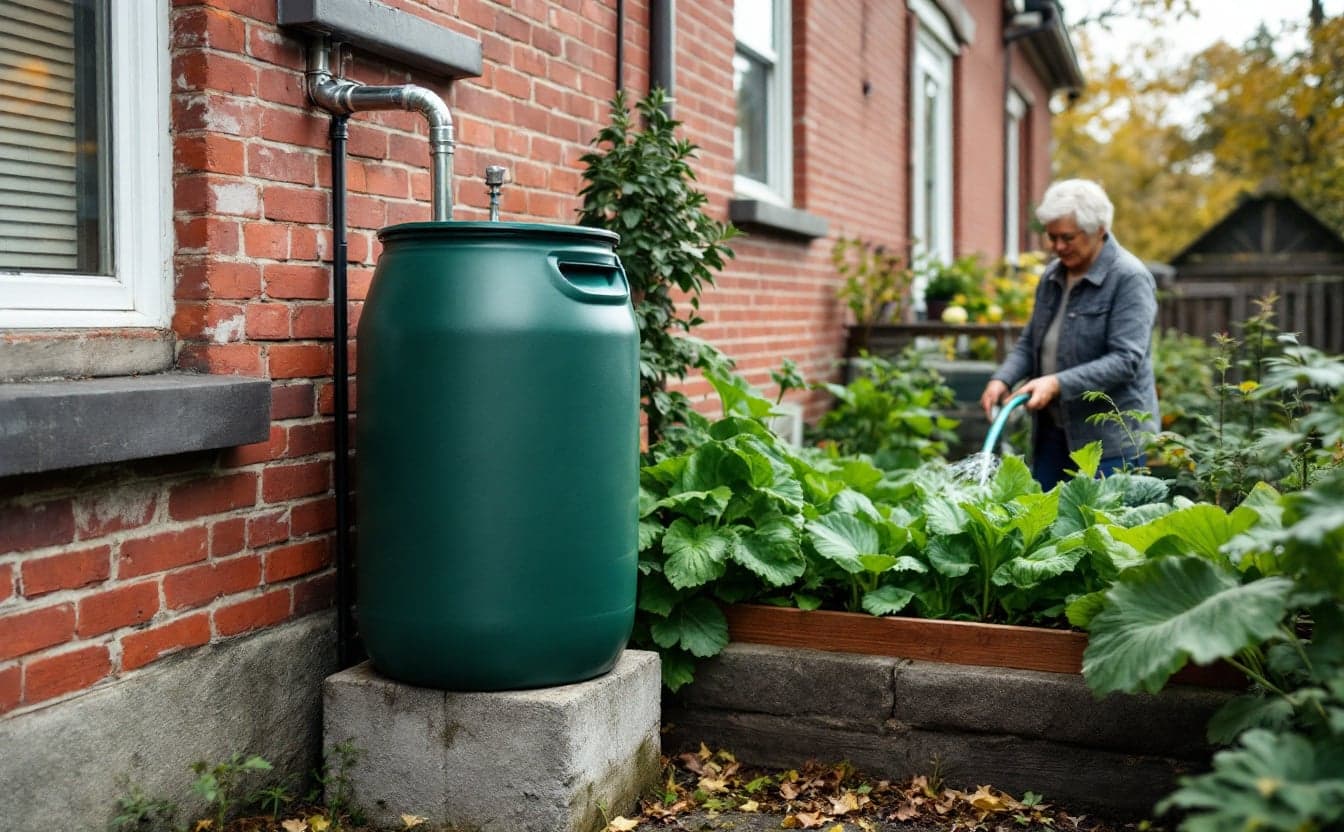
One inch of rain falling on 1,000 square feet of roof comes to about 623 gallons of water. On most houses, nearly all of it runs down the downspouts, across the driveway and into a storm drain within the hour, carrying whatever it picked up along the way. A rain barrel keeps a small share of that water on your property, where it can go to tomatoes, street trees and a thirsty lawn in August instead of the sewer system.
Gear links may earn us a commission. As an Amazon Associate I earn from qualifying purchases.
Trail-ready picks
- Rainy seasonRTS 50-gallon rain barrel with brass spigotA sealed 50-gallon barrel with a brass spigot that takes a standard garden hose.See on Amazon
- Rainy seasonDownspout diverter for 2x3 and 3x4 inch spoutsFills the barrel from the downspout, then sends water back down the spout once it is full.See on Amazon
- StormsFosPower A1 emergency weather radioNOAA weather alerts, a hand crank and solar panel, and a USB port to top up a phone.See on Amazon
The numbers also explain the most common surprise for new owners: a rain barrel fills fast. A good barrel is not mainly a question of size. It is a question of how well it handles everything that comes after the barrel is full, and how easily you can get the water back out.
If you only want the short version, the best rain barrel for most homes is a 50- to 60-gallon barrel made of dark, opaque plastic, with a sealed or finely screened top, an overflow you can point away from the house, a spigot near the bottom that takes a standard garden hose, and a stand that lifts it high enough to fit a watering can underneath. The details below help you pick one, set it up and keep it out of trouble.
How much water one downspout sends
Start by working out how much roof drains to the downspout you plan to use. Measure the footprint as seen from above (length times width of that section of roof), not the sloped surface. A steep roof catches the same rain as a flat one with the same footprint.
| Roof area feeding the downspout | Gallons from 1 inch of rain (about 80 percent captured) | Rain that fills a 50-gallon barrel |
|---|---|---|
| 250 sq ft (23 m²) | about 125 | about 0.4 inch |
| 500 sq ft (46 m²) | about 250 | about 0.2 inch |
| 1,000 sq ft (93 m²) | about 500 | about 0.1 inch |
The 80 percent figure allows for splash, evaporation and water that soaks into shingles. Our rain barrel calculator runs the same math for your own roof, rainfall and barrel size.
The takeaway: in most of the country, one ordinary storm fills a 50-gallon barrel and sends the rest on past it. Capacity matters less than you might think. Overflow matters more, and so does how often you use the water, because an empty barrel is the only kind that catches anything.
Features that separate a good barrel from a nuisance
Capacity and linking
Fifty to 60 gallons is the usual size, and it is a sensible one: big enough to water a few beds between storms, small enough to place beside a house. If you find yourself emptying it after every rain, link a second barrel rather than buying one huge tank. Linking kits connect barrels through a port near the top or bottom, so the first fills the next.
Dark, opaque walls
Light makes algae grow. A dark, opaque barrel keeps the water cleaner and the spigot from clogging with green slime. Translucent food drums and white tubs look fine on day one and murky by July.
A sealed or screened inlet
Every opening should be sealed or covered with fine mesh. That keeps out leaves, mosquitoes, curious squirrels and small children. A child-safe lid that screws or locks down is worth insisting on if kids play in the yard.
An overflow you can aim
When the barrel is full, water needs somewhere to go besides over the rim and down along your foundation. Look for an overflow port near the top that takes a hose, so you can send the extra several feet away toward a lawn, a bed or a rain garden. The alternative is a diverter at the downspout that sends water back down the spout once the barrel is full; more on that below.
Spigot height and a stand
A rain barrel works by gravity, and gravity is gentle. Each foot of height adds less than half a pound per square inch of pressure, so a barrel on the ground barely pushes water through a long hose. Set it on a solid stand or a level platform of cinder blocks about 12 to 18 inches high and you can fit a watering can under the spigot and run a short hose or soaker hose to nearby beds. Check that the spigot threads take a standard garden hose.
A level, solid base
Water weighs about 8.3 pounds per gallon, so a full 50-gallon barrel weighs more than 400 pounds. Set the stand on compacted gravel or pavers, check it with a level in both directions, and strap tall barrels to the wall if the ground ever softens.
Before you go
- Jackery Explorer 300 (about 290 Wh)See on Amazon
- VIVOSUN dual-chamber compost tumblerSee on Amazon
Gear links may earn us a commission. As an Amazon Associate I earn from qualifying purchases.
Two barrels and a diverter to consider
How we picked: we read makers' descriptions, published reviews and what owners report after a few seasons of use. We did not run these barrels through our own trials.
A sealed barrel with a brass spigot
The RTS 50-gallon rain barrel with a brass spigot is a sealed barrel with a brass spigot that takes a standard garden hose. Metal spigots tend to hold up to years of turning better than plastic ones, and a sealed top answers the mosquito and child-safety questions before you have to. It is a good fit for a front yard or a side path where you want the barrel to look tidy.
The same size, from recycled plastic
The RTS 50-gallon ECO rain barrel offers the same 50-gallon capacity molded from recycled plastic, with a hose spigot. If you plan to link two barrels at one downspout, buying a matching pair keeps the heights and fittings consistent.
A diverter that sends the extra back down the spout
A downspout diverter sits in the downspout itself and sends water to the barrel through a short hose until the barrel is full, then lets the rest continue down the spout as it always did. That means no overflow puddle at the base of the barrel, and the downspout keeps working if you disconnect the barrel for winter. This one fits the two common residential sizes, 2x3 and 3x4 inches; measure yours before you order. Installing one means cutting into the downspout, so renters should ask first.
Pack list
- RTS 50-gallon rain barrel with brass spigot 50 galA sealed 50-gallon barrel with a brass spigot that takes a standard garden hose.See on Amazon
- Downspout diverter for 2x3 and 3x4 inch spoutsFills the barrel from the downspout, then sends water back down the spout once it is full.See on Amazon
Is a rain barrel legal where you live?
In most states, collecting rain from your own roof in a barrel or two is allowed without any permit, and many cities actively encourage it because every gallon held back is a gallon that does not flood a storm sewer. The exceptions come mostly from Western water law, under which water that would have flowed into a stream may already belong to someone downstream with an older right.
Colorado is the best-known case. Since a 2016 state law, households there may use up to two rain barrels with a combined capacity of no more than 110 gallons, at single-family homes and buildings with four or fewer units, and the water must be used outdoors on the same property. A few other Western states set their own conditions, especially for larger systems.
Check two places before you buy: your state's water resources agency (or state engineer), and your cooperative extension office, which usually has a plain-language rain barrel page. If you live under a homeowners association, read its rules on placement and appearance too.
Free barrels and rebates
Before you pay full price, look for a program. Water utilities, stormwater agencies and county conservation districts in many parts of the country offer rebates, run spring barrel sales, or give barrels away to residents who sit through a short class.
Philadelphia's Rain Check program is a good example of the giveaway model. Residential property owners in the city attend a required virtual workshop on stormwater and can then receive a free rain barrel, with discounts on larger projects such as rain gardens. Other cities fund rebates through stormwater fees, and some reduce those fees for properties that manage their own runoff.
Programs change with budgets, so search your water utility's site for "rain barrel" each spring, and call your extension office or 311 if nothing turns up. Community gardens and land trusts are another route. Many collect roof water off a shed or shade structure for shared plots, and our story on land trusts and community conservation looks at how some of those gardens hold on to their ground.
Mosquitoes, the one real downside
Standing water breeds mosquitoes, and the CDC's advice for most containers is to empty and scrub them once a week. A rain barrel is the exception you design for instead, because the point is to keep the water.
Seal every opening, including the overflow, with fine mesh, and check the screens each month for gaps or sagging. Keep gutters clear, since a clogged gutter holds puddles of its own. Use the water often. If a barrel will sit full for a long stretch, mosquito dunks made with Bti, a naturally occurring bacterium that kills mosquito larvae, are sold for exactly this kind of water. Follow the label.
Using the water: garden yes, drinking no
Rainwater is soft and free of the chlorine in tap water, and plants like it. Roof runoff is still not clean water. The EPA's Soak Up the Rain program notes that rain picks up bacteria from bird and animal droppings and chemicals from roofing materials on its way to the barrel.
Use it freely on lawns, flowers, shrubs, trees and a compost pile that is drying out (our guide on how to start composting explains why moisture matters). For vegetables, water the soil, not the leaves, and wash everything you harvest. UConn Extension advises against splashing roof water directly on leafy crops you will eat raw. Do not drink it, cook with it, or fill a pet's bowl or a kiddie pool from the spigot.
Getting through winter
Ice expands, and a barrel that freezes full can split its seams or crack its spigot. In places with hard freezes, drain the barrel before the first one, leave the spigot open, and store the barrel upside down or in a shed. Disconnect any hose from the diverter, or set the diverter to send everything down the spout. Then make sure the downspout once again empties several feet from the foundation.
Where winters are mild, you can keep collecting year round. Check the overflow during big storms, since winter rain often comes in larger doses.
For renters and small spaces
Renting does not rule out a rain barrel, but it changes the setup. Ask your landlord in writing before you cut into a downspout or attach anything to the building, and offer to restore it when you move. A freestanding barrel with a diverter is the easiest arrangement to undo, and the barrel itself moves with you once it is empty.
Balconies are a different story. A full 50-gallon barrel weighs more than 400 pounds, far more than most balconies were built to carry on one spot. Stick to watering cans set under a rain chain or a scupper, empty them into your planters, and save the barrel for the ground.
If you have no roof of your own, a community garden plot often comes with access to shared water. Gardeners in those spaces have long practiced the same habits of saving and sharing that run through our story on seed saving traditions among immigrant gardeners. Ask whether the garden could use a second barrel. It is one of the simplest donations a garden can put to work.
Next: try the Rain Barrel Calculator or browse the full Pack list.