Organizations Widening the Circle
- Home
- Organizations Widening the Circle
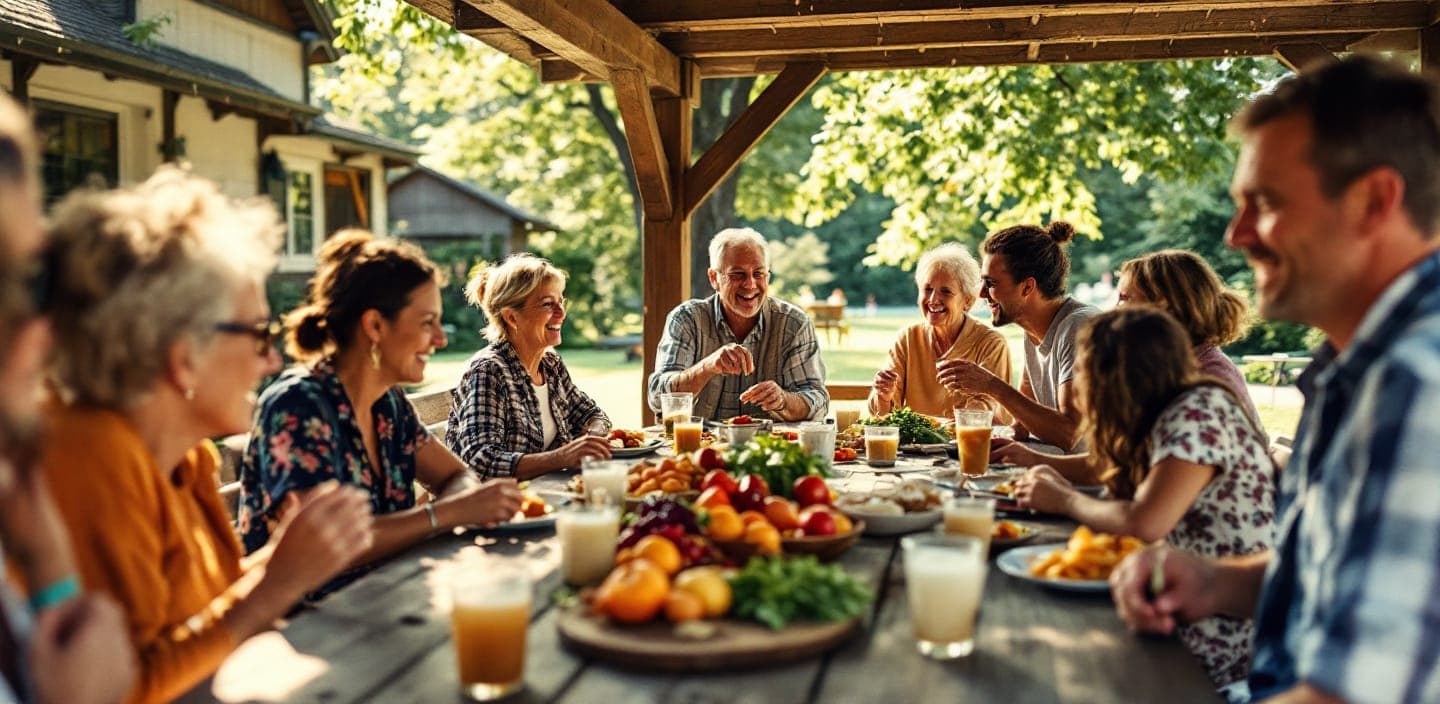
Some of the most effective work on access and equity in the environmental field happens in organizations that started as a blog post, a group walk or a neighborhood meeting. The profiles below cover groups we think every practitioner should know, grouped by what they mainly do. The selection is our own editorial judgment, and we have no partnership with any of them. Programs and leadership change, so check each organization's own site for current details.
Outdoor access
Outdoor Afro
Rue Mapp started Outdoor Afro in 2009 as a blog about Black people's connections to nature, and it grew into a national nonprofit based in Oakland, California. Its model rests on trained volunteer leaders who organize hikes, bird walks, camping trips, fishing outings and other activities in their own cities, so that a first trip outdoors happens with people who look like you and share your sense of humor. The group's tone is celebratory rather than remedial: the message is that Black people already belong outdoors and always have. Outdoor Afro has also become a visible voice on public lands and on safety in the outdoors. Mapp's 2022 book Nature Swagger captures the spirit of the organization well.
Latino Outdoors
Founded by José González and active since 2013, Latino Outdoors began in California and grew into a national, largely volunteer-led network. Local teams organize family-friendly outings, often bilingual, that treat culture and family as strengths to bring outdoors rather than obstacles to overcome. The organization puts real weight on storytelling: its Yo Cuento series collects first-person accounts of Latino experiences in nature, which push back against the idea that Latinos are newcomers to conservation. It also works on leadership development for its volunteers, many of whom have gone on to roles in agencies and nonprofits.
GirlTrek
GirlTrek was founded in 2010 by T. Morgan Dixon and Vanessa Garrison as a public health movement encouraging Black women to walk every day. It is not an environmental group in the conventional sense, which is part of why it belongs here. Walking is presented as self-care, as a way to reclaim neighborhood streets, and as a link to Black history and the women who walked for freedom. Its scale and its focus on health show how outdoor access connects to issues that matter to people who would never call themselves environmentalists.
Native Womens Wilderness
Founded by Jaylyn Gough, who is Diné, Native Womens Wilderness works to raise the voices of Native women in the outdoors and to remind outdoor recreation that the lands it uses are ancestral homelands. It shares stories, runs gatherings and outdoor experiences for Native women, and encourages recreation groups and businesses to learn whose land they are on. For land trusts and outdoor companies, it is a good example of how to center Indigenous people as present-day users and stewards of land rather than as figures from the past.
Outward Bound Adventures
Outward Bound Adventures has been taking young people into the outdoors since 1962, which makes it one of the longest-running outdoor education programs focused on youth of color in the country. It grew from a science club in Pasadena, California, and expanded across Los Angeles, with early programs supported by federal War on Poverty funding. Over the decades it has run wilderness expeditions, day trips and environmental education, and it has worked to prepare young people for jobs in conservation. Its long history makes it a useful reminder that this work did not begin in the last decade.
Youth and community
Environmental Learning for Kids
Environmental Learning for Kids, usually called ELK, is a Denver nonprofit founded in 1996 by two wildlife biologists. It offers outdoor and environmental education to young people of color and their families from the metro area's urban neighborhoods. Its distinctive feature is length of involvement: young people can stay with its core program for years, from elementary school through high school, moving from field science and camping trips toward leadership roles and preparation for college and careers. That long arc is what many short programs lack, and it is why ELK is often cited as a model for building a local pipeline into natural-resource careers.
Greening Youth Foundation
Founded by Angelou Ezeilo and based in Atlanta, the Greening Youth Foundation runs environmental education for children and internship and career programs for young adults, with a focus on young people of color. It has placed interns and fellows with public land agencies and conservation partners, giving many participants their first paid experience in the field. Engage, Connect, Protect (New Society Publishers, 2019), which Ezeilo wrote with journalist Nick Chiles, describes the approach for practitioners who want to build similar programs.
Student Conservation Association
The Student Conservation Association grew out of a 1950s college thesis by Elizabeth Cushman (later Elizabeth Cushman Titus Putnam) proposing that students help care for national parks, and it began placing volunteers in 1957. Today it runs crews and internships for high school and college students and young adults on public lands and in cities across the country. SCA has made recruiting a more diverse corps an explicit goal, with urban community programs and partnerships aimed at young people who would not otherwise hear about conservation work.
Groundwork USA
Groundwork USA is the national network of local Groundwork trusts, which work in communities that have seen disinvestment to turn vacant land and brownfields into parks, gardens and trails. Many trusts employ local teenagers on youth Green Teams that do the hands-on work, giving them pay, skills and a stake in the result. The network is a good example of conservation that starts with what a neighborhood needs rather than with a map of scenic land.
Environmental justice
WE ACT for Environmental Justice
WE ACT was founded in West Harlem in 1988 by Peggy Shepard, Vernice Miller-Travis and Chuck Sutton, after residents fought the impacts of a new sewage treatment plant and a concentration of bus depots in Northern Manhattan. It became one of the best-known community-based environmental justice groups in the country. Its partnerships with researchers at Columbia University's Mailman School of Public Health on air pollution and children's health set an example for community-based participatory research, in which residents help design the questions as well as answer them. WE ACT works on air quality, housing, climate and energy, and has extended its advocacy to state and federal policy.
Deep South Center for Environmental Justice
Founded in 1992 by sociologist Beverly Wright, who grew up in the stretch of Louisiana's petrochemical corridor often called Cancer Alley, the Deep South Center works with communities along the Gulf Coast. Its "communiversity" model joins academic researchers with community members as equals. The center has trained residents for environmental cleanup and construction jobs, worked extensively on recovery after Hurricane Katrina, and, with Robert Bullard, founded the HBCU Climate Change Consortium in 2011 to involve students at historically Black colleges and universities in climate work.
UPROSE
UPROSE, founded in 1966, describes itself as Brooklyn's oldest Latino community-based organization. Led for many years by Elizabeth Yeampierre, it has made its Sunset Park neighborhood a center of climate justice organizing, pushing for a working waterfront that supports local jobs and resilience rather than luxury development. It is a strong example of a community group that writes its own climate adaptation plans instead of waiting to comment on someone else's.
Careers and pipeline
Hispanic Access Foundation
Based in Washington, DC, the Hispanic Access Foundation connects Latino communities with conservation, health, financial and civic resources, and works with churches and community partners to do it. In conservation it is known for Latino Conservation Week, which it launched in 2014 as an annual series of outdoor and stewardship events run with partners across the country, and for internship and fellowship programs that place young Latinos with conservation employers. It co-authored The Nature Gap (2020) with the Center for American Progress, explained on our reports page.
MANRRS
Minorities in Agriculture, Natural Resources and Related Sciences is a national society that supports students and professionals from minority backgrounds in agriculture, forestry, natural resources and related fields. Its campus chapters provide peer support and leadership roles, and its annual conference and career fair connects students with agencies and employers. For recruiters who want to reach beyond the usual channels, it is one of the most direct routes.
Accountability and data
Green 2.0
Green 2.0 came to wide attention in 2014, when it released Dorceta Taylor's study The State of Diversity in Environmental Organizations and its finding of a "green ceiling" for people of color. Since then it has pressed environmental nonprofits and foundations to disclose the demographics of their staff and boards and has published periodic report cards on who does and does not share data. Its core argument is simple: what gets measured publicly is more likely to change. Read more about the original study on our reports page.
Finding local groups
The organizations above are national or regional. Much of the best work happens in groups with one staff member or none: a neighborhood garden association, a church hiking club, a tenants' group fighting a truck depot. To find them, ask your local library, parks department and community colleges who already brings people outdoors; follow the speakers at regional environmental justice gatherings (see our page on conferences); and look for programs led by people from the community they serve. For models you can adapt, see Initiatives.
Gear links may earn us a commission. As an Amazon Associate I earn from qualifying purchases.
Pack list for a field day
- Celestron Nature DX 8x42 about 1.4 lbA widely recommended first pair: waterproof, with a close focus for birds at the feeder.$148.97 Amazon price, as of Oct 22, 2026, 4:26 PM UTCSee on Amazon
- Sibley field guide, eastern North AmericaPainted plates of every regular eastern species, with the field marks pointed out.$13.29 Amazon price, as of Oct 22, 2026, 4:26 PM UTCSee on Amazon
- Sibley field guide, western North AmericaThe western companion, for birders west of the Rockies.$13.48 Amazon price, as of Oct 22, 2026, 4:26 PM UTCSee on Amazon
Product prices and availability are accurate as of the date/time indicated and are subject to change.