

About Environmental Diversity
- Home
- About Environmental Diversity
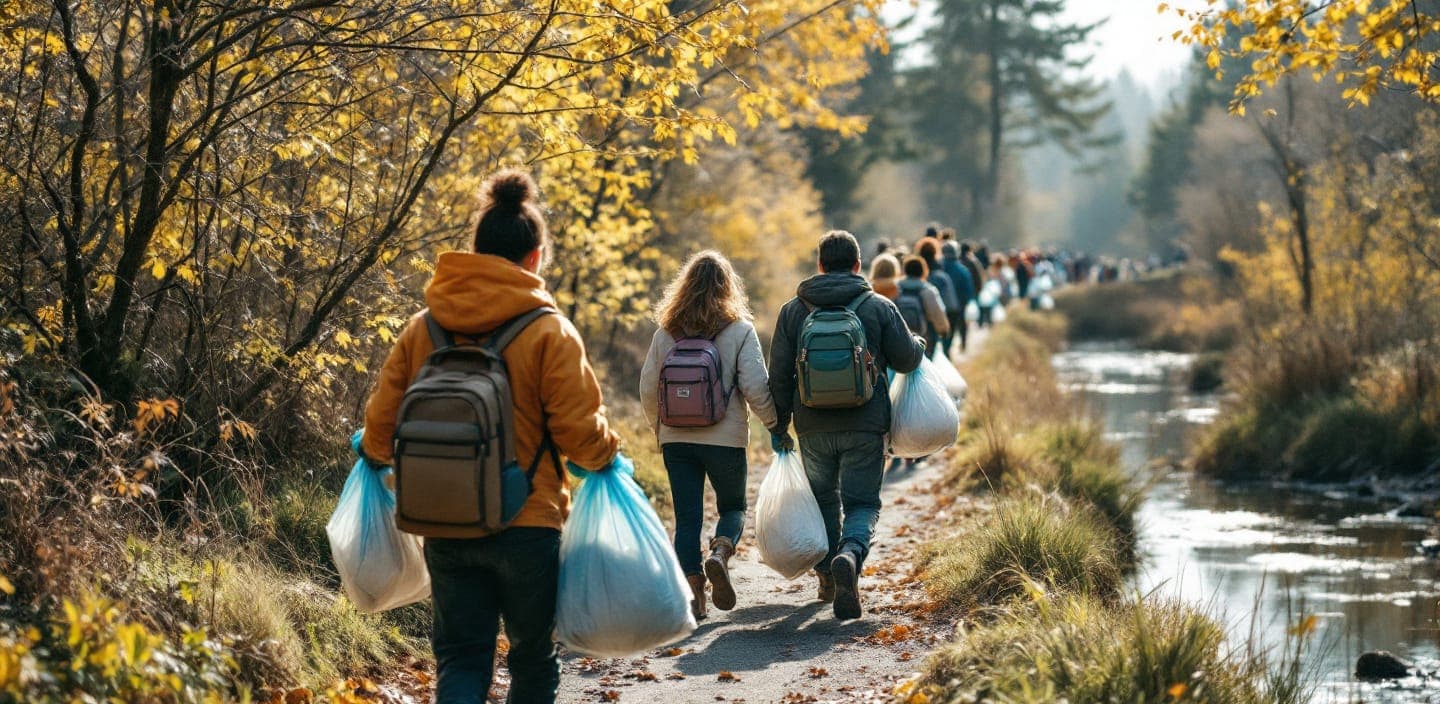
Environmental Diversity is a small publication about who gets to work in, lead, enjoy and benefit from environmental work in the United States. That takes in the people a land trust hires and promotes, the families living beside a freight corridor or a refinery, the teenager deciding whether a state park feels like a place for her, and the student wondering whether a forestry degree leads anywhere she would want to go.
Who we are
We are writers and editors with backgrounds in public health, outdoor education, land conservation, workforce development and urban planning. We are not a nonprofit, a consultancy or an advocacy group. We do not run programs, sell trainings or take clients. Our job is to report, explain and argue in good faith, and to point readers toward the people and organizations doing the work on the ground.
Most of our readers are practitioners: staff and volunteers at environmental nonprofits, land trusts and outdoor clubs, employees of park and natural-resource agencies, community organizers, and students weighing a green career. We write for them as colleagues, in plain language, with specific examples and a bias toward things that can actually be tried.
What we cover
Our stories fall into seven sections.
- Environmental Justice: pollution, health and who carries the burden; the history of the movement; how communities use data, law and organizing to win.
- Outdoor Access & Recreation: parks, trails and public lands, and the barriers (cost, transport, safety, a sense of belonging) that keep people away from them.
- Conservation: land trusts, habitat and wildlife work, tribal co-stewardship, and the question of whose land and whose priorities get protected.
- Sustainable Communities: housing, transit, tree canopy, heat, flooding and green infrastructure at the scale of the neighborhood.
- Green Careers & Leadership: hiring, internships, pay, retention and leadership in environmental organizations.
- Lifestyle: everyday choices about food, gear, gardening and getting outside, written for people on ordinary budgets.
- Society & Culture: books, history, media, faith and the stories Americans tell themselves about nature.
Alongside the stories we keep a set of reference pages that we update as we learn: an annotated reading list, profiles of organizations and influential people, landmark reports explained, a guide to conferences and gatherings, and a page on initiatives that widen access.
Editorial standards
A few rules guide everything we publish.
We name our sources in the sentence. When we cite a number, we say where it comes from: the Census Bureau, a peer-reviewed journal, a government report, a survey by a named organization. If we cannot find a reliable source for a figure, we describe the finding in words rather than guess.
We go to the original. Wherever we can, we read the report itself rather than the press release about it, and we try to say what a study measured as well as what it left out.
We do not invent people. No composite characters, no unnamed "sources say" anecdotes dressed up as reporting. When we use a hypothetical example to make a point, we say plainly that it is hypothetical.
We write to a date. Environmental policy, and federal policy in particular, can change quickly; the broad cutbacks to federal environmental-justice and diversity programs in 2025 are a reminder. Every story carries its publication date and is written to be accurate as of that date. If you are reading an older piece, check whether the programs it mentions still exist in the same form.
We are fair to the people we cover. Disagreement is welcome on these pages. Caricature is not. When we describe an organization's work in detail, we try to give it a chance to point out factual errors before publication.
Contributed pieces
Now and then we publish pieces written by practitioners: a park ranger on recruiting from local high schools, a land trust director on a partnership that nearly fell apart, an organizer on a permitting fight. We value them because they come from people who do the work and can describe it from the inside.
Contributed pieces get the same editing as our own stories. An editor checks facts and sources, asks for specifics where a draft leans on generalities, and works with the writer on structure and length. We will not change a writer's argument without agreement, but we will cut claims we cannot verify. Contributors tell us about any relationship they have with organizations they mention, and where that matters to readers we say so on the page.
How the site is funded
Environmental Diversity is paid for partly through affiliate links. When a story or one of our field kit pages suggests a piece of gear, a book or a service, the link may go to Amazon or to a store in the CJ Affiliate network, and we may earn a commission if you buy. Some stories also carry one partner banner, always labelled "Supported by".
These links never decide what we cover. Gear suggestions are chosen from manufacturers' specifications and published reviews, not from hands-on testing, and we say so where they appear. Partners don't see stories before publication and can't ask for changes. As an Amazon Associate we earn from qualifying purchases; the privacy notice explains the cookies involved.
Corrections policy
We will get things wrong sometimes. When we do, we fix the story and add a dated note at the bottom saying what changed. We do not quietly rewrite published work. If you spot an error, please write to us with the story title and what you believe is wrong; a link to a source helps a great deal.
Our contributors
Imani Hollis writes about environmental justice. She trained in public health and spent years on community health assessments and neighborhood air-monitoring projects, which left her with equal respect for good data and for what residents already know. She is most interested in how evidence turns into decisions.
Tomás Alvarado covers outdoor access and recreation. A former outdoor educator, he has led school groups, first-time campers and backpacking trips, and he writes about the practical details (gear, transport, permits, safety) that decide whether someone comes back for a second trip.
Grace Nakamura writes about conservation and land trusts. Her background is in land protection and stewardship, from easement monitoring to community meetings about proposed preserves, and she follows partnerships between land trusts, tribes and city neighborhoods closely.
Darnell Pruitt covers green careers, workforce and leadership. He has worked in recruiting and workforce development, and he writes about the unglamorous parts of changing a field: job descriptions, pay, supervision, promotion, and the reasons people leave.
Celia Martín writes about sustainable communities. Trained as an urban planner, she has worked on neighborhood plans, park siting and transit access, and she looks at climate and environmental questions through housing, streets and public space.
Profiles and links
When we profile an organization or a person, or link to an agency's work, it is because we think readers should know about it. That choice is ours alone. It is not a partnership, and nothing on these pages speaks for the groups we write about.
Contact us
Story ideas, corrections, pitches for contributed pieces and general notes are all welcome through our contact page or by email to [email protected]. We read every message, though we cannot answer them all. If you are pitching a piece, tell us in a few sentences what you want to argue, what you know firsthand, and why readers should care now.