Seeds From Home: Immigrant Gardeners and the Craft of Saving Seed
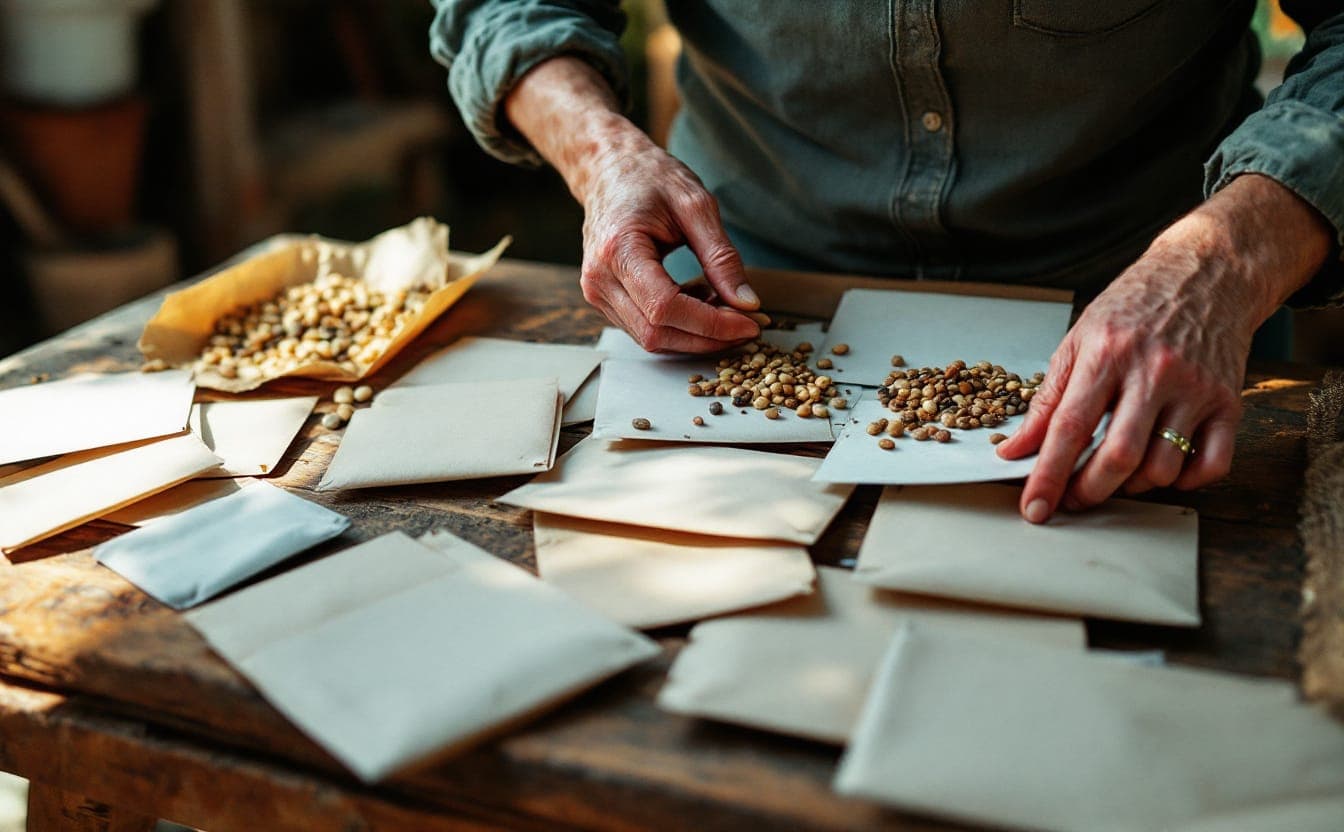
On a community garden plot in late summer you might find bitter melon climbing a chain-link fence, a stand of perilla gone to flower, yardlong beans hanging in pale green loops, and a row of chilies that never show up in a supermarket. Many of these plants did not come from a seed rack. They came from a jar in someone's kitchen, from a relative's suitcase years ago, or from a neighbor who saved them from last season's best plant. Seed saving is one of the oldest forms of environmental knowledge people have, and in immigrant and diaspora communities across the United States it is very much alive in backyard beds and shared plots.
Why gardeners keep varieties from home
The plainest reason is food. Many of the varieties that matter most to a cuisine are hard to find in American stores, or are sold only in a form that misses the point: dried instead of fresh, or one generic chili in place of the specific one a dish calls for. Papalo and pipicha in Mexican cooking, Thai basil in Southeast Asian kitchens, the greens called callaloo in the Caribbean (amaranth in Jamaica, taro leaves in Trinidad), roselle for the hibiscus drinks known as bissap, zobo, sorrel or agua de jamaica: for many households, the only dependable way to get the real thing is to grow it.
The second reason is memory. A variety can carry a family's history in a very literal way. It was grown by a grandmother, carried across an ocean, replanted in a new climate and kept going through decades of moves. For gardeners who cannot easily return to the place they came from, planting and saving a family seed each year is a way of staying connected to it.
The third reason is adaptation. A variety saved year after year in the same garden is slowly selected for that garden's soil, season length and pests. Gardeners who save seed from their healthiest plants are doing what farmers everywhere have done for thousands of years, which is shaping a crop to fit a place. A chili line that started in a hot, humid lowland may, after a dozen years of careful saving, ripen reliably in a short northern summer.
None of this is new to the American story. Okra, black-eyed peas and sesame (often called benne in the South) are among the crops tied to the African diaspora that reached the Americas through the transatlantic slave trade, and Black farmers and seed keepers kept many such varieties alive across generations. Native nations have been working to bring home seeds held in museum and university collections, returning varieties to the communities that developed them. The gardener saving mustard green seed in a paper envelope today belongs to a long line.
Seed libraries and community gardens
Seed libraries have spread through public libraries, community centers and gardens. The model is simple. People take seed, grow it, save some from their harvest and bring it back. Many seed libraries make a point of collecting culturally significant varieties and labeling them with names in the languages gardeners actually use, so that a packet reads "ampalaya" or "karela" as well as "bitter melon."
The idea ran into legal trouble early on. In 2014, state agriculture officials in Pennsylvania told a public library's seed exchange that it fell under rules written for commercial seed sales, which involve testing and labeling. The episode drew national attention, and in the years since, a number of states have clarified their laws to exempt non-commercial seed sharing. Rules still differ from state to state, so anyone starting a seed library should check with their state department of agriculture first.
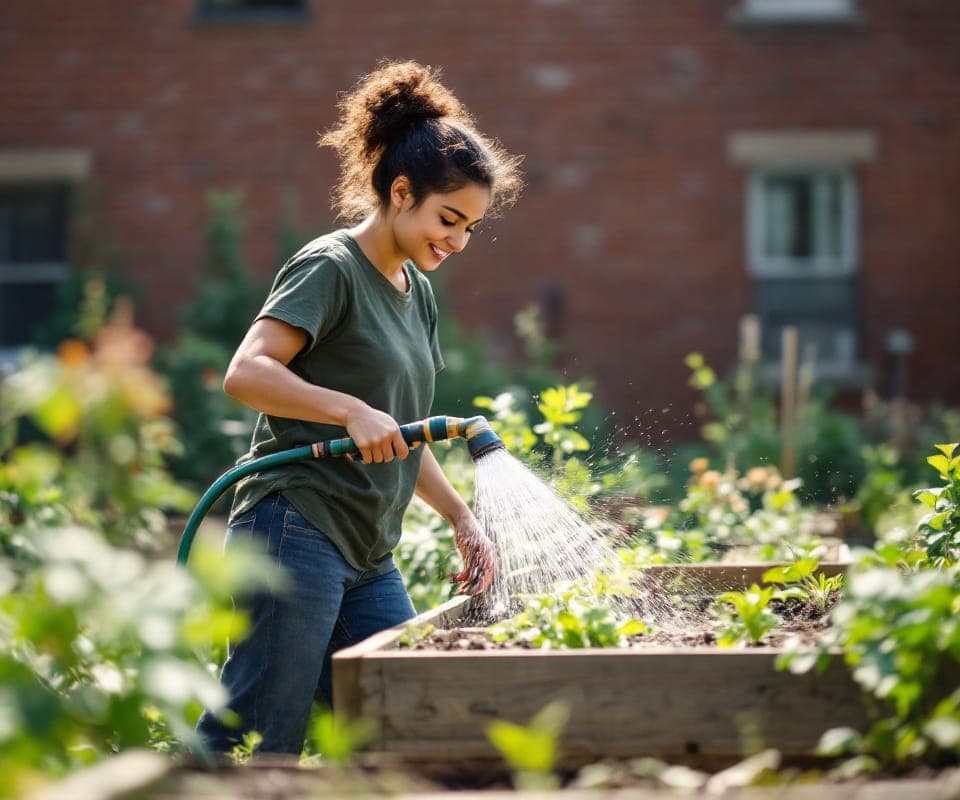
Community gardens matter here as much as seed libraries do. For many immigrant and refugee families, a garden plot is one of the few places where they can grow familiar food, speak their own language with neighbors and show children what their grandparents grew. Refugee resettlement agencies, including the International Rescue Committee through its New Roots program, have run gardening and farming programs for exactly these reasons. Our organization profiles include groups working to open land and growing space to people who have long been shut out of it.
Garden rules can help or get in the way. Seed saving needs time: plants have to stay in the ground well past the point of picking for the kitchen, until the seed inside has matured. A rule that every plot must be cleared by a fixed date in early fall can make saving seed from late crops impossible. So can bans on trellises (bitter melon and long beans need something to climb) or rules against letting plants "go to seed." Garden managers who want their gardens to serve diverse communities should ask gardeners what they grow and how, then write rules with room for it. Printing rules in the languages gardeners speak helps. So does choosing plot coordinators from among the gardeners themselves.
Before you go
 The Color of Law, by Richard Rothstein$8.54 Amazon price, as of Oct 22, 2026, 4:26 PM UTCSee on Amazon
 Braiding Sweetgrass, by Robin Wall Kimmerer$14.30 Amazon price, as of Oct 22, 2026, 4:26 PM UTCSee on Amazon
 The Seed Keeper, by Diane Wilson$10.30 Amazon price, as of Oct 22, 2026, 4:26 PM UTCSee on Amazon
Product prices and availability are accurate as of the date/time indicated and are subject to change.
Gear links may earn us a commission. As an Amazon Associate I earn from qualifying purchases.
The basics of saving seed
Saving seed takes some knowledge but no special equipment. A handful of principles covers most of what a home gardener needs.
Start with open-pollinated seed
Open-pollinated varieties produce seed that grows into plants like the parent, as long as they haven't crossed with a different variety. Heirlooms are open-pollinated varieties that have been handed down, often for generations. Hybrids, usually marked "F1" on seed packets, come from crossing two distinct parent lines. Seed saved from a hybrid will sprout, but the plants that grow from it will show a shuffle of traits and usually won't resemble the plant you saved it from. Most family seeds are open-pollinated, which is part of why they have lasted.
Know how each crop pollinates
This is the part that trips people up. Some crops mostly pollinate themselves, so different varieties growing near each other rarely mix. Others are pollinated by insects or wind and will cross readily with other varieties of the same species.
| Crop | How it usually pollinates | What that means for seed saving |
|---|---|---|
| Beans, peas, lettuce | Mostly self-pollinating | Good beginner crops; a little space between varieties is usually enough |
| Tomatoes | Mostly self-pollinating | Easy; some older types cross more readily, so give them extra distance |
| Peppers and chilies | Self-pollinating, but insects often cross them | Separate varieties well or cover flowers with fine mesh bags |
| Squash and pumpkins | Insects, within the same species | Grow one variety per species, or hand-pollinate and tape the flowers shut |
| Cucumbers and melons | Insects | Armenian cucumber is botanically a melon and crosses with melons, not cucumbers |
| Corn | Wind | Needs wide separation or staggered planting, and seed from many plants |
| Bok choy, napa cabbage, turnips | Insects; all one species | These cross with one another, so let only one flower at a time |
| Beets and chard | Wind; one species | They cross with each other and need two seasons to make seed |
Squash deserves a special word because so many cuisines depend on it. The common garden squashes belong to a few different species. Varieties within a species cross freely, while different species mostly do not. Knowing which species your squash belongs to tells you what it can safely grow beside.
Save from many plants
Saving seed from a single plant narrows a variety's genetic base over time. For self-pollinating crops, a few plants are often enough. Corn and other cross-pollinated crops lose vigor when they are grown from too few parents, so experienced seed savers keep seed from many plants. Choose the healthiest, most typical plants, and resist the urge to save only from the first fruit that ripens.
Harvest at full maturity
For dry-seeded crops such as beans, peas, okra, mustard greens and lettuce, leave the pods or seed heads on the plant until they are dry and brown, then pick, crush or thresh them and blow away the chaff. For wet-seeded crops such as tomatoes, cucumbers and melons, harvest fruit fully ripe or past it. Cucumbers grown for seed should stay on the vine until they turn yellow or brown, long after anyone would want to eat them. Tomato seeds are often fermented for a few days in a little water to break down their gel coating, then rinsed and dried.
Dry thoroughly and store well
Spread seed on paper or a screen, out of direct sun, until it is completely dry. Large seeds such as beans should shatter rather than squash when struck with a hammer. Store seed in paper envelopes, or in sealed jars once it is fully dry, somewhere cool and dark. Heat and moisture are the main enemies of stored seed. Label everything with the variety name in every language you know it by, the year, where it came from and any family story attached to it. Seed lifespan varies a great deal: onion and parsnip seed lose viability quickly, while tomato seed can stay good for years.
For more depth, Suzanne Ashworth's Seed to Seed is a standard reference, and Seed Savers Exchange, a nonprofit based in Iowa, has spent decades preserving heirloom varieties, many of them first brought to the country by immigrant families. Our resources page collects other books and guides worth reading.
Sharing seed legally and safely
Sharing seed within your community is usually simple: a swap at a garden potluck, a donation to the seed library, a packet mailed to a friend in another state. A few cautions apply.
Bringing seed across borders is regulated. Seeds entering the United States fall under the U.S. Department of Agriculture's Animal and Plant Health Inspection Service, because seeds can carry plant pests and diseases and some species are invasive. Bringing seed home in a suitcase or receiving it by international mail without the required paperwork can break federal rules, and undeclared seed can be seized at the border. Requirements depend on the plant and the country it comes from, so check before you travel or order. In 2020, federal officials warned people not to plant unsolicited seed packets that had arrived in the mail from abroad, a reminder that the rules exist for real reasons.
Some varieties are legally protected. Certain commercial varieties are covered by plant variety protection certificates or patents that limit saving and sharing. Heirlooms and family seeds generally are not, but read the packet of anything you bought.
Respect where a seed came from. A family's seed is a gift. Some communities hold particular seeds as sacred or not meant to leave the community. Ask before passing along someone else's seed, credit them when you do, and honor a request to keep a variety close.
Watch for plants that spread. A plant that is cherished in one region can be invasive in another. If something reseeds aggressively in your garden, think twice before handing it out.
Each saved seed is a small decision about what survives. Gardeners keeping a grandmother's chili going in a city plot make that decision for their families, and in doing so they keep varieties in circulation that no seed catalog would bother to sell. Garden managers, librarians and conservation groups can help most by making room: time at the end of the season, shelf space for seed, plots close to where people live, and rules written with growers instead of for them. More pieces on culture, food and the land are collected in our stories archive.
Gear links may earn us a commission. As an Amazon Associate I earn from qualifying purchases.
Pack list: books to carry
- Braiding Sweetgrass, by Robin Wall KimmererA botanist and Potawatomi writer on what plants teach about reciprocity; the book many readers start with.$14.30 Amazon price, as of Oct 22, 2026, 4:26 PM UTCSee on Amazon
- The Seed Keeper, by Diane WilsonA novel about a Dakota family, its seeds and the women who kept them through generations.$10.30 Amazon price, as of Oct 22, 2026, 4:26 PM UTCSee on Amazon
- Gathering Moss, by Robin Wall KimmererShort essays on mosses that train you to notice the small life along any trail or sidewalk.$15.65 Amazon price, as of Oct 22, 2026, 4:26 PM UTCSee on Amazon
Product prices and availability are accurate as of the date/time indicated and are subject to change.
Next: browse the full Pack list.