


How to Build an Emergency Kit for Home, One Shelf at a Time
In February 2021, a winter storm cut power to millions of Texans, many of them for days, and left millions more under orders to boil water they had no way to heat. The state health department later counted 246 deaths. Most were linked to hypothermia. Others came from carbon monoxide poisoning, fires, crashes and medical equipment that stopped when the electricity did.
Gear links may earn us a commission. As an Amazon Associate I earn from qualifying purchases.
Trail-ready picks
 StormsFosPower A1 emergency weather radioNOAA weather alerts, a hand crank and solar panel, and a USB port to top up a phone.$29.99 Amazon price, as of Oct 22, 2026, 4:26 PM UTCSee on Amazon
 Short daysLepro rechargeable headlampCharges by USB and has a red mode that keeps your night vision.$18.99 Amazon price, as of Oct 22, 2026, 4:26 PM UTCSee on Amazon
 Any tripGeneral Medi mini first aid kitA compact zip case of bandages and basics for a glove box or pack.$11.93 Amazon price, as of Oct 22, 2026, 4:27 PM UTCSee on Amazon
Product prices and availability are accurate as of the date/time indicated and are subject to change.
An emergency kit cannot fix a failed grid. What it can do is carry a household through the first several days, when roads are blocked, stores are closed and help is stretched thin. The federal preparedness site Ready.gov boils the idea down to a short list. Here it is in our own words, followed by the parts the list leaves to you: the people in your home, the money you have to work with and the size of your apartment.
The basic kit at a glance
| What | How much | Why |
|---|---|---|
| Water | 1 gallon per person per day, for several days | Drinking, cooking, basic washing |
| Food | Several days that keep without a fridge | Stores and kitchens may be out of reach |
| Light | A flashlight or headlamp for each person, plus batteries | Candles start house fires |
| Radio | Battery or hand-crank, with NOAA Weather Radio | Warnings when phones and internet fail |
| Phone power | A charged battery pack and the right cords | Calls, texts and emergency alerts |
| First aid | A basic kit, plus your own medicines | Small injuries grow when help is slow |
| Sanitation | Wet wipes, garbage bags, plastic ties | For when water or sewer service stops |
| Tools | Whistle, wrench or pliers, can opener, scissors, duct tape, plastic sheeting | Signaling, shutting off utilities, sealing a room |
| Masks | A few well-fitting masks, N95s if you can | Dust and smoke |
| Paper | Local map, phone numbers, copies of key documents | For when the phone is dead |
Pack it in one or two containers you can carry, such as a lidded plastic bin or an old duffel bag, and keep it where everyone in the household can find it in the dark. A hall closet works. The back corner of the attic does not.
Water comes first
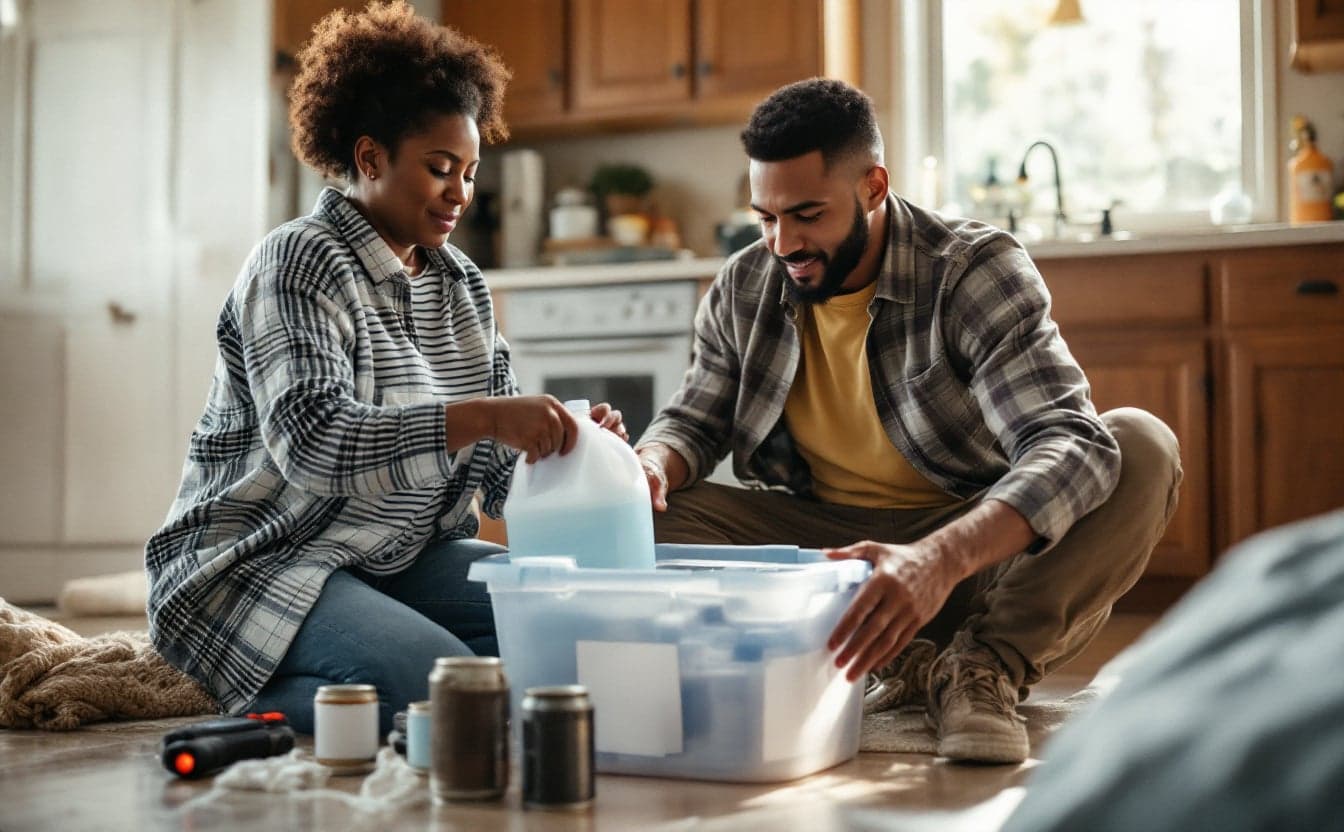
Water is the heaviest part of a kit and the part people most often shortchange. Ready.gov's guideline is at least one gallon per person per day for several days, for drinking and sanitation together. A household of three planning for three days needs 9 gallons, which weighs about 75 pounds. The agency's water storage page adds that children, nursing mothers and people who are sick need more, and that hot weather can double what anyone needs. Pets drink too.
Sealed bottled water keeps until its date. If you fill your own containers from the tap, use clean food-grade bottles with tight caps (rinsed soda bottles hold up well; milk jugs break down and leak) and replace the water every six months. An easy reminder: change the water when you change the clocks.
Bigger containers save floor space. A rigid 7-gallon jug with a spigot holds a week's supply for one person at that one-gallon rate and stands on a closet floor. When a storm is in the forecast, filling the bathtub gives you water for flushing and washing, though not for drinking.
Before you go
 RTS 50-gallon rain barrel with brass spigot$99.00 Amazon price, as of Oct 22, 2026, 4:26 PM UTCSee on Amazon
 Downspout diverter for 2x3 and 3x4 inch spouts$24.99 Amazon price, as of Oct 22, 2026, 4:26 PM UTCSee on Amazon
 Jackery Explorer 300 (about 290 Wh)$259.00 Amazon price, as of Oct 22, 2026, 4:26 PM UTCSee on Amazon
Product prices and availability are accurate as of the date/time indicated and are subject to change.
Gear links may earn us a commission. As an Amazon Associate I earn from qualifying purchases.
Food you can eat without a stove
Plan for several days of food that needs no refrigeration and little or no cooking: canned beans, fish and chicken, peanut butter, crackers, cereal, dried fruit, nuts, shelf-stable milk, granola bars. Stock what your household already eats. A blackout is a bad moment to learn that nobody will touch canned sardines. Pack a manual can opener, and remember that salty food raises the water bill in your kit.
If someone eats low-sodium, gluten-free, diabetic-friendly, halal or kosher food, the kit has to reflect it. Write the purchase month on each can with a marker, eat the oldest first and replace it on your next shopping trip.
When the power goes out, keep the refrigerator and freezer closed. Federal food safety guidance says an unopened refrigerator keeps food cold for about 4 hours, and a full freezer holds its temperature for about 48 hours (about 24 if it is half full). Eat from the fridge first, then the freezer, then the kit.
Light, news and power
Give every person a flashlight or headlamp. Headlamps leave both hands free for carrying a child, cooking or climbing stairs in a dark building. Skip candles if you can. Fire safety agencies recommend flashlights during outages, because a candle left burning in a dark, crowded room is an easy way to start a house fire.
A radio is the piece people forget. NOAA Weather Radio broadcasts National Weather Service warnings around the clock, and it keeps working when cell towers are overloaded or down. Hand-crank and solar models recharge without batteries, and many have a USB port to give a phone a little charge. For a phone, a charged battery pack and the right cords cover most short outages.
Pack list
- FosPower A1 emergency weather radio about 11 ozNOAA weather alerts, a hand crank and solar panel, and a USB port to top up a phone.$29.99 Amazon price, as of Oct 22, 2026, 4:26 PM UTCSee on Amazon
- Lepro rechargeable headlamp about 2.7 ozCharges by USB and has a red mode that keeps your night vision.$18.99 Amazon price, as of Oct 22, 2026, 4:26 PM UTCSee on Amazon
- General Medi mini first aid kit about 8 ozA compact zip case of bandages and basics for a glove box or pack.$11.93 Amazon price, as of Oct 22, 2026, 4:27 PM UTCSee on Amazon
- 3M Aura N95 respirators, 20 pack 20 masksNIOSH-approved N95s that fold flat; the kind of mask that filters smoke particles.$34.59 Amazon price, as of Oct 22, 2026, 4:26 PM UTCSee on Amazon
- BLUETTI power stationsBLUETTI's own store, with home backup bundles and solar panels.Shop at BLUETTI
Product prices and availability are accurate as of the date/time indicated and are subject to change.
We picked these from makers' specifications, published reviews and owner feedback, not from hands-on trials of our own. If you would rather have a built-in flashlight on the radio, a Midland model with weather scan is a sturdy alternative.
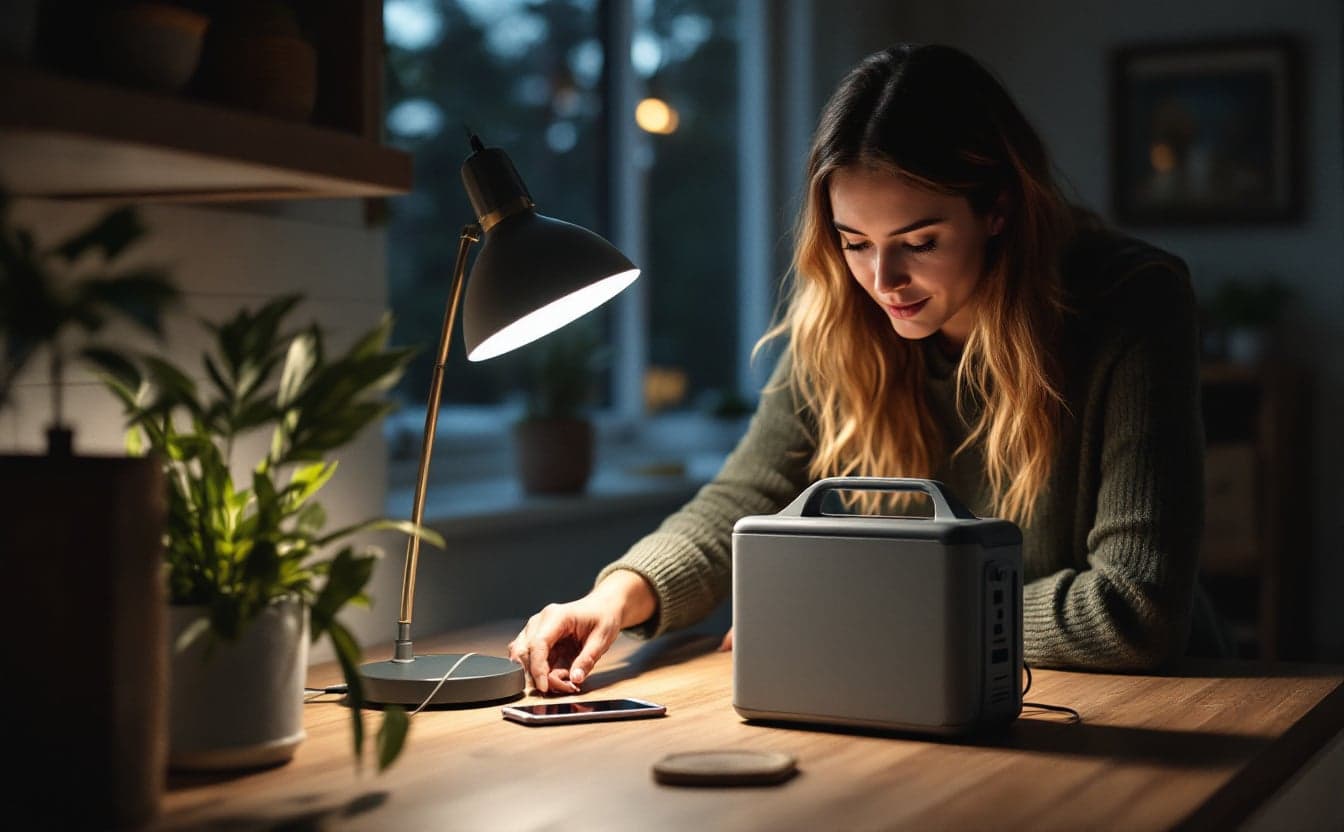
Longer outages call for more stored power. A small portable power station will keep phones, a laptop, lights and a small fan going for an evening, and it runs safely indoors because it burns nothing. Fuel-burning generators are a different matter: they must stay outside, well away from windows and doors, because their exhaust can kill. If you have any fuel-burning appliance, a carbon monoxide alarm with battery backup belongs on every level of the home.
Medicines, documents and cash
Medicines matter more than almost anything else in the bin. Keep several days of prescription medicines if your pharmacy and insurer allow an early refill, plus a written list of every medicine, dose and allergy. Add a spare pair of glasses, hearing aid batteries, and any over-the-counter basics your household relies on.
Documents are easier to protect than to replace. Put copies of IDs, insurance cards (including Medicare and Medicaid), prescriptions, the lease or deed, birth certificates and immigration papers in a zip-top bag. A second copy, photographed on your phone or saved to a password-protected account, covers the day the bag gets wet.
Keep some cash in small bills. Card readers and ATMs need electricity. Write the numbers you would call on paper too: family, a neighbor, your doctor, your pharmacy, your landlord, an out-of-town contact. During big emergencies a text often gets through when a call will not.
Kits for the people in your home
The basic list assumes a healthy adult. Most homes have someone who needs more.
People with disabilities
Ready.gov's guidance for people with disabilities starts with a support network: people who know your needs, have a key and know where your supplies are. Then come the specifics: extra batteries for hearing aids and power wheelchairs, chargers, a patch kit or sealant for wheelchair tires, a backup supply of oxygen and a list of your medicines and equipment. If you depend on electric medical equipment, ask your power company to put you on its list for priority restoration; many utilities keep a medical registry. Insulin and some other medicines need cold storage, so keep a small cooler and ice packs ready. Deaf and hard-of-hearing households may want a vibrating or flashing alert and a written card that explains how to communicate.
Older adults
Ready.gov's advice for older adults also leans on people: at least one person with a spare key who knows how to help with medicines or equipment. Keep walkers, canes and wheelchairs within reach of the bed, plan how you would leave if you had to, and consider direct deposit for benefits so a mail delay does not become a money problem. If you have an older neighbor who lives alone, a two-minute check-in during a heat wave or cold snap is one of the most useful things you can do.
Babies and young children
Pack ready-to-feed formula (it needs no water), bottles, diapers, wipes, diaper cream and a change of clothes for each child. A favorite small toy, a book or a deck of cards helps more than you would think. For school-age kids, a card in the backpack with family phone numbers and a meeting place makes reunification easier.
Pets
Ready.gov's pet checklist covers several days of food in a sealed container, water and a bowl, medicines, a leash or harness, a carrier, litter or waste bags, and a photo of you with your pet. Keep microchip contact details current. Many public shelters and hotels do not take pets, so find a pet-friendly option, or a friend who will take yours, before you need one.
Building a kit on a tight budget
Nobody has to buy a kit in one trip. Start with what is already in the house (the flashlight in the junk drawer, old phone cords, a duffel bag) and add a little each week. A two-month plan might look like this:
- Week 1: fill clean bottles with tap water and label them with the date.
- Week 2: buy two or three extra cans on each grocery trip, plus a can opener.
- Week 3: write the medicine list and copy your documents at the library or with your phone.
- Week 4: batteries and a flashlight or headlamp for each person.
- Week 5: first aid basics, wet wipes and garbage bags.
- Week 6: a radio.
- Week 7: what your baby, elder or pet needs.
- Week 8: a small envelope of cash, and the bin to hold everything.
Buy one extra of what you already buy. Discount and dollar stores carry most of the list. Some libraries lend tools and camping gear, and community groups sometimes hand out free preparedness kits before hurricane or winter season. Ask your local emergency management office, or dial 211.
Renters and small apartments
Small spaces need a split kit. Keep water under a bed or along the floor of a closet, and a lighter grab bag by the door with the radio, lights, medicines, documents and cash. A rolling bin beats a heavy box if you live up several flights.
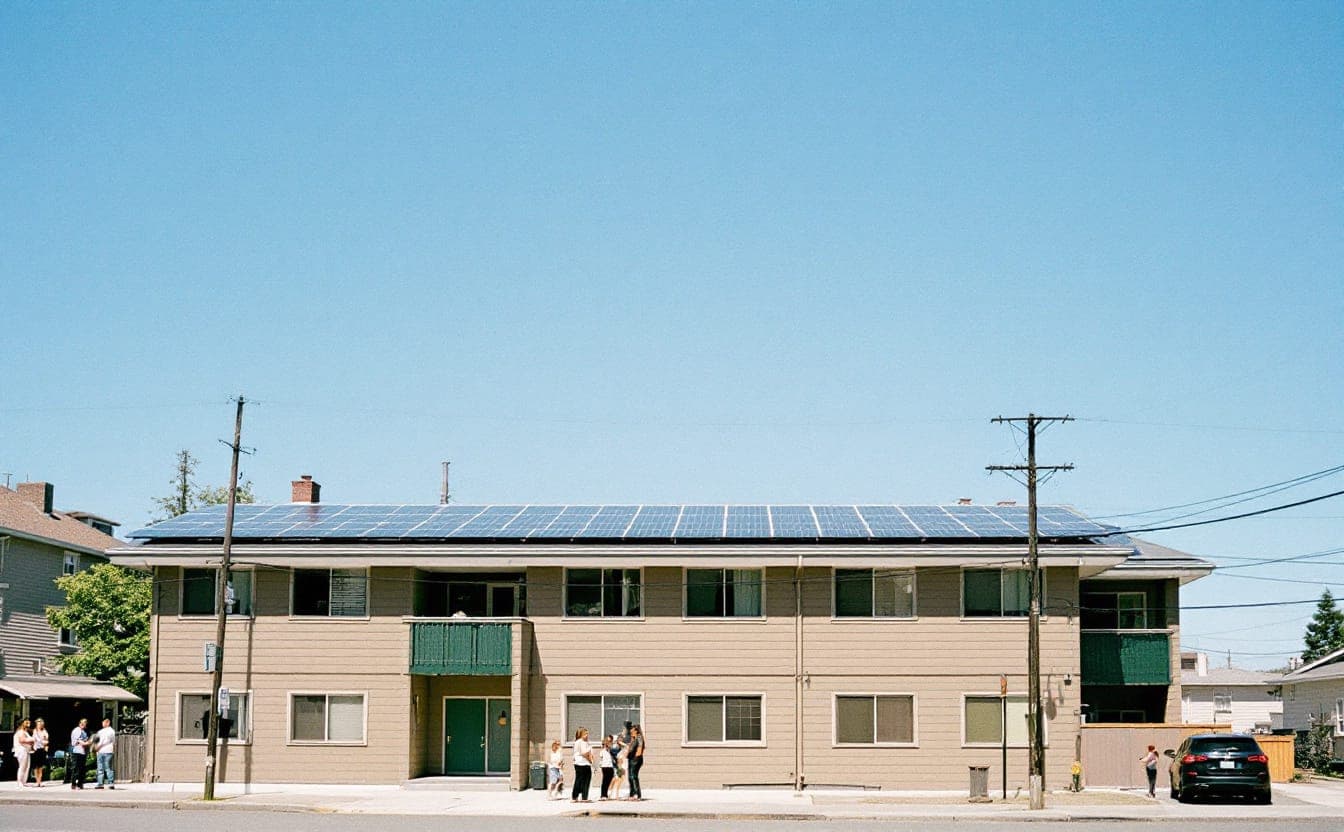
Renters cannot install a standby generator, and running anything that burns fuel on a balcony or in a hallway is dangerous and usually against fire codes. Battery power is the realistic choice. It is worth knowing the limits of other energy programs too: community solar for renters can lower your bill, but the credits do nothing for you when your building goes dark.
Ask your landlord now where the water shutoff is, who to call when the power fails and how the building handles an evacuation when the elevators are out. That last question matters most for anyone who uses a wheelchair or cannot manage stairs. Get to know at least one neighbor on your floor.
When home is not the safest place
Sometimes the right move is to leave. Cities and counties open warming centers during extreme cold and cooling centers during heat waves, often in libraries and recreation centers. Check your city's website or local news, or call 211. Centers sometimes go unused because hours end too early or the site is hard to reach without a car, a pattern our story on urban heat and tree canopy looks at. If you cannot get there on your own, ask whether the city provides rides.
Mutual aid groups, tenant associations and faith communities often move faster than official agencies in the first days. They run phone trees, deliver water and check on people living alone. Joining one before an emergency is the most direct way to make sure someone knocks on your door during one.
Keep it current
Twice a year, open the bin. Replace water you bottled yourself, eat and restock food near its date, swap batteries, update the medicine list, recharge battery packs and any power station, and check that children's spare clothes still fit. Agree on a meeting place outside the home and an out-of-town contact everyone can text. Then close the lid and put the kit back where everyone can find it in the dark.
Next: try the Rain Barrel Calculator or browse the full Pack list.