



Best Portable Power Station for Outages, Medical Devices and Camping
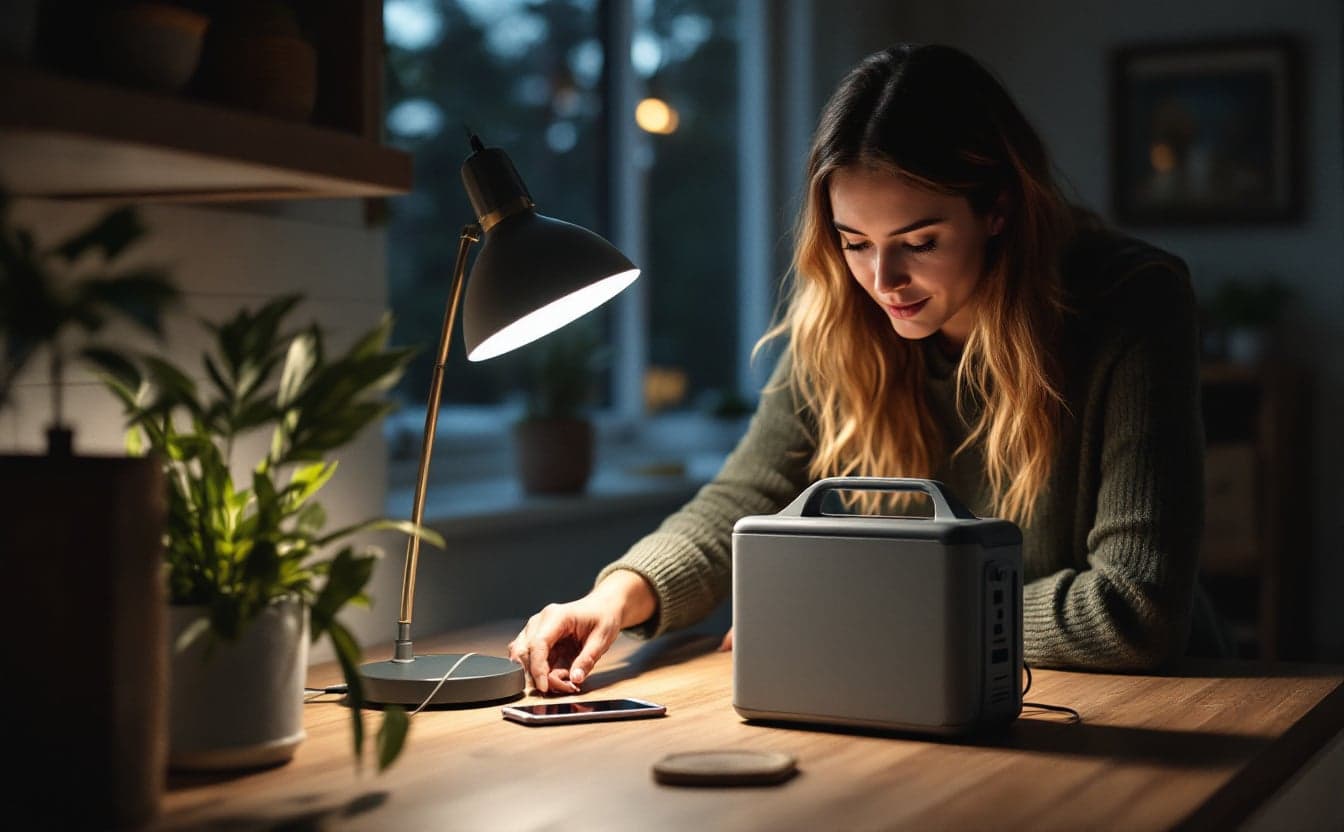
Most power station boxes lead with two numbers, and most buying mistakes come from mixing them up. Watt-hours (Wh) tell you how much energy the battery holds. Watts (W) tell you how much power it can deliver at any one moment. A unit with plenty of watt-hours but a weak inverter won't start your microwave. A unit with a strong inverter and a small battery will run the microwave for a few minutes and then quit.
Gear links may earn us a commission. As an Amazon Associate I earn from qualifying purchases.
Trail-ready picks
 OutagesJackery Explorer 300 (about 290 Wh)Small enough to carry; keeps phones, a laptop, lights and a small fan going for an evening.$259.00 Amazon price, as of Oct 23, 2026, 4:27 PM UTCSee on Amazon
 OutagesJackery Explorer 1000 v2 (about 1,070 Wh)Enough stored power to keep a fridge cold through a short outage, on an LFP battery.$499.00 Amazon price, as of Oct 23, 2026, 4:27 PM UTCSee on Amazon
 OutagesBLUETTI AC180 (about 1,150 Wh)LiFePO4 battery with a stronger inverter for bigger appliances.$449.00 Amazon price, as of Oct 23, 2026, 4:27 PM UTCSee on Amazon
Product prices and availability are accurate as of the date/time indicated and are subject to change.
Match those two numbers to the things you actually need to run, for as long as you need to run them, and you've done most of the work. Our short list comes first, then the math, the battery chemistry, solar charging, safety and a closer look at each pick.
Quick picks
- Phones, lights, a router and a laptop through an evening: the Jackery Explorer 300, about 290 Wh and a little over 7 pounds.
- A fridge through a short outage, or a night of CPAP plus phones: the Jackery Explorer 1000 v2, about 1,070 Wh on an LFP battery.
- Bigger appliances like a microwave, a kettle or power tools: the BLUETTI AC180, about 1,150 Wh with a stronger inverter.
- A full lineup with matching folding solar panels in one place: EcoFlow's own store.
Pack list
- Jackery Explorer 300 (about 290 Wh) 7.1 lbSmall enough to carry; keeps phones, a laptop, lights and a small fan going for an evening.$259.00 Amazon price, as of Oct 23, 2026, 4:27 PM UTCSee on Amazon
- Jackery Explorer 1000 v2 (about 1,070 Wh) 23.8 lbEnough stored power to keep a fridge cold through a short outage, on an LFP battery.$499.00 Amazon price, as of Oct 23, 2026, 4:27 PM UTCSee on Amazon
- BLUETTI AC180 (about 1,150 Wh) about 35 lbLiFePO4 battery with a stronger inverter for bigger appliances.$449.00 Amazon price, as of Oct 23, 2026, 4:27 PM UTCSee on Amazon
- EcoFlow portable power stationsEcoFlow's own store, with its power stations and folding solar panels.Shop at EcoFlow
- BLUETTI power stationsBLUETTI's own store, with home backup bundles and solar panels.Shop at BLUETTI
Product prices and availability are accurate as of the date/time indicated and are subject to change.
A note on how we chose: these come from makers' published specifications, independent reviews and what owners report after a season or two of use. We have not run our own bench trials.
Watt-hours and watts, without the jargon
Think of a water tank and a faucet. Watt-hours are the size of the tank. Watts are how far the faucet opens. The math connecting them is simple: watts multiplied by hours equals watt-hours. A 10-watt LED lamp left on for 5 hours uses 50 Wh.
Two details change the answer in real life.
The first is surge. Anything with a motor or compressor (a refrigerator, a well pump, a circular saw) pulls a brief spike of power when it starts, often several times its running draw. A power station lists a rated output, which it can hold steadily, and a higher surge or peak figure for those first moments. Your biggest motor has to fit under the surge number.
The second is conversion loss. The battery stores direct current, and the inverter turns it into the household current your plugs expect. That conversion wastes some energy, commonly 10 to 15 percent. A station holding 1,000 Wh might deliver something like 850 to 900 Wh to devices plugged into its AC outlets. USB and 12-volt outputs skip the inverter and waste less.
To find what a device draws, look at the label on the device or its power brick, which lists watts or volts and amps (multiply those two to get watts). The label shows a maximum, not typical use. A plug-in energy meter shows the real number, and many public libraries lend them, often through a utility program.
Before you go
 OXO Good Grips Easy-Clean compost bin$30.99 Amazon price, as of Oct 23, 2026, 4:27 PM UTCSee on Amazon
 VIVOSUN dual-chamber compost tumbler$67.99 Amazon price, as of Oct 23, 2026, 4:27 PM UTCSee on Amazon
 REOTEMP 20-inch compost thermometer$23.99 Amazon price, as of Oct 23, 2026, 4:26 PM UTCSee on Amazon
Product prices and availability are accurate as of the date/time indicated and are subject to change.
Gear links may earn us a commission. As an Amazon Associate I earn from qualifying purchases.
Sizing one: a worked example
Write down what you would run, how many watts each thing uses and for how many hours. Here is a sample outage night for a small household. Your numbers will differ.
| Device | Average draw | Hours | Energy used |
|---|---|---|---|
| Refrigerator (average, as the compressor cycles) | 60 W | 12 | 720 Wh |
| Two phones, one full charge each | about 15 Wh each | 30 Wh | |
| Wi-Fi router | 10 W | 12 | 120 Wh |
| LED lamp | 10 W | 5 | 50 Wh |
| CPAP (placeholder, see below) | 40 W | 8 | 320 Wh |
| Total | 1,240 Wh |
Add a cushion for inverter loss by dividing by 0.85: 1,240 Wh becomes roughly 1,460 Wh. That is more than any of the three single units above holds on one charge. You have options:
- Drop the router overnight and save 120 Wh.
- Run the CPAP from a DC cable approved by its maker, which avoids inverter loss.
- Recharge during the day from solar panels or a car.
- Buy a larger station or an add-on battery, if the model supports one.
Take the fridge out of the plan and the total falls to 520 Wh, or about 610 Wh with the cushion. A 1,000 Wh unit covers that with room to spare. The small 290 Wh unit handles phones, router and lamp for an evening, but not the fridge or the CPAP.
For your own fridge, look at the yellow EnergyGuide label, which lists estimated yearly use in kilowatt-hours. Divide by 365 for a daily figure. A fridge listed at 500 kWh a year uses about 1.4 kWh a day, or roughly 57 watts on average. Remember the startup surge, too: the compressor needs far more than its average for a moment, which a 300-watt unit can't supply.
A careful word on medical devices
CPAP machines vary a lot. Many draw a few tens of watts with the humidifier off and noticeably more with heated humidification or heated tubing. The 40 W in the table is a placeholder, not a figure for your machine. Check your manual or the label on the power supply, and ask your equipment supplier what a typical night uses and whether the maker sells a DC cable or battery for your model. Talk to your prescriber before changing humidifier settings to save power.
Oxygen concentrators and other life-sustaining equipment usually draw much more than a CPAP, and a power station should be a bridge, not your whole plan. Ready.gov advises asking your power company to put you on its list for priority restoration if you depend on powered medical equipment. Know where you would go if an outage ran longer than your battery.
LFP or NMC: the battery inside
Power stations use one of two lithium chemistries, and the label tells you which.
NMC (nickel manganese cobalt) packs more energy into less weight. Many smaller and older models use it. These are typically rated for several hundred to around a thousand full charge cycles before capacity falls to roughly 80 percent of new.
LFP (lithium iron phosphate, often written LiFePO4) is heavier for the same capacity, but makers commonly rate it for 3,000 cycles or more, and the chemistry is more stable when it gets hot. Most newer mid-size and large units use it.
If the station sits in a closet for outages and gets charged a handful of times a year, cycle life barely matters. If you camp every weekend or plan to cycle it daily with solar, LFP is worth the extra pounds. Whatever the chemistry, read the storage advice in the manual. Many makers suggest topping up every few months even when the unit sits unused.
Charging from the sun
Every station lists a maximum solar input in watts and a voltage range. A panel has to fit both, and its plug has to match or come with an adapter from the maker.
Panels rarely deliver their full rated output. A panel rated at 100 watts might put out 60 to 80 watts in strong midday sun, and a few hundred watt-hours over a clear day. Winter sun, clouds and partial shade cut that sharply. To refill a 1,000 Wh station in one day, plan on several hundred watts of panels in good sun. A folding panel propped behind a window loses a lot to the glass and the angle; outdoors, facing the sun and tilted toward it, does far better.
Renters with a sunny balcony can make this work, though it's worth checking the lease for rules about what can sit on a balcony. It also helps to keep two ideas separate. Community solar for renters can lower your monthly bill, but its credits do nothing during an outage. A battery with a panel is what keeps the lamp on.
Safe indoors, unlike a generator
This is the biggest reason renters and apartment dwellers choose a power station. A gas generator burns fuel and makes carbon monoxide. The Consumer Product Safety Commission links more than 100 deaths a year to portable generators, says a single generator can produce as much carbon monoxide as hundreds of cars, and warns never to run one inside a home or garage, even with doors and windows open. The CDC's generator guidance says to keep it outside at least 20 feet from doors, windows and vents. On a fourth-floor balcony, there is no safe place for one.
A power station burns nothing and gives off no fumes, so it can sit beside the bed. It still holds a lot of energy, so treat it with some care:
- Buy from an established maker, and look for a safety listing from a recognized testing lab in the specs.
- Keep the vents clear and don't cover the unit while it charges or runs a heavy load.
- Keep it away from heaters, direct sun in a hot car and standing water.
- Stop using a unit that is swollen, cracked or smells hot.
- Never plug any power source into a wall outlet to feed the house. That is called backfeeding, and it can electrocute utility workers. Whole-home connections need a transfer switch installed by an electrician.
Who actually needs one
Households in places with frequent or long outages get the most use: storm-prone coasts, rural lines at the end of the grid, and parts of California where utilities cut power on high-wind days to prevent wildfires.
People who rely on powered medical devices, refrigerated medicine or a power wheelchair have the strongest case, with the caveats above.
Renters and apartment residents, who can't install a standby generator or safely run a portable one, have few other choices.
Campers, van travelers and people who work remotely from parks or campgrounds use them weekly, and that steady use is where LFP pays off.
If outages where you live are rare and short, you may not need one at all. A couple of charged battery packs, a headlamp and a radio carry most homes through an evening. Our home emergency kit guide covers that lighter setup and the water, food and medicine that matter more than any battery.
The picks, one by one
| Jackery Explorer 300 | Jackery Explorer 1000 v2 | BLUETTI AC180 | |
|---|---|---|---|
| Capacity | about 290 Wh | about 1,070 Wh | about 1,150 Wh |
| Battery | NMC lithium-ion | LFP | LFP |
| Rated AC output | 300 W | 1,500 W | 1,800 W |
| Weight | about 7 lb | about 24 lb | more than 35 lb |
| Best for | Phones, lights, router, laptop | Fridge or CPAP through a short outage | Bigger appliances, longer runs |
Figures are from the makers' published specs.
Jackery Explorer 300: the one you can carry anywhere
The Explorer 300 holds about 290 Wh and weighs about 7 pounds, light enough to carry down a flight of stairs with one hand or tuck into a hall closet. Its 300-watt rated output handles phones, a laptop, LED lights, a small fan and a router, which covers most of an apartment's evening needs. It won't run a fridge or anything with a heating element. It uses NMC cells, so it's the light, simple choice for occasional outages, a weekend at a campsite or a workday away from an outlet, not for daily solar cycling.
Jackery Explorer 1000 v2: the middle that covers most homes
The Explorer 1000 v2 stores about 1,070 Wh on an LFP battery and weighs about 24 pounds, roughly a full suitcase. Jackery lists a 1,500-watt rated output with a 3,000-watt surge, enough to start most kitchen refrigerators, and rates the battery for thousands of cycles. In our worked example, it keeps a fridge running through an evening and well into the night, or covers a CPAP plus phones and lights with room left over. For most households planning around storm outages, this size is the sensible middle.
BLUETTI AC180: more muscle for appliances
The AC180 holds about 1,150 Wh on an LFP battery that BLUETTI rates for more than 3,500 cycles to 80 percent capacity. Its 1,800-watt inverter runs bigger appliances, and a boost mode lets heating appliances such as a kettle run at reduced power above that limit. BLUETTI lists solar input up to 500 watts. The trade-off is weight: at more than 35 pounds, it's a unit you set in one place rather than carry up and down stairs. BLUETTI also sells direct, including home backup bundles with solar panels, through BLUETTI's own store.
EcoFlow: shop the maker's own store
EcoFlow makes power stations in a range of sizes along with folding solar panels designed to plug into them. Shopping at EcoFlow's own store puts the whole lineup and the matching panels on one site, which spares you hunting for adapters. Use the sizing steps above to settle on a capacity and an output first, then compare models on their spec pages.
Before you buy: a checklist
- Write your load list, watts times hours, and add 15 to 20 percent.
- Check the rated output and surge against your biggest appliance.
- Choose LFP if you'll cycle it often or want it to last many years.
- Lift something of similar weight and ask whether you can carry it where it needs to go.
- Count the outlets you need: AC plugs, USB-C for laptops, a 12-volt port for a CPAP cable.
- If a medical device will run from it while it charges, confirm that the maker supports that use.
- Read the warranty length and how service works.
- Plan how you'll recharge it: wall, car or solar.
Once it arrives, charge it fully and run your real devices from it for one evening while the grid is still up. Note how far the battery level dropped. That one practice night will tell you more about your outage plan than any spec sheet.
Next: try the Compost Calculator or browse the full Pack list.