


Low-Waste Living on a Tight Budget: Habits That Save Money and Purchases to Skip
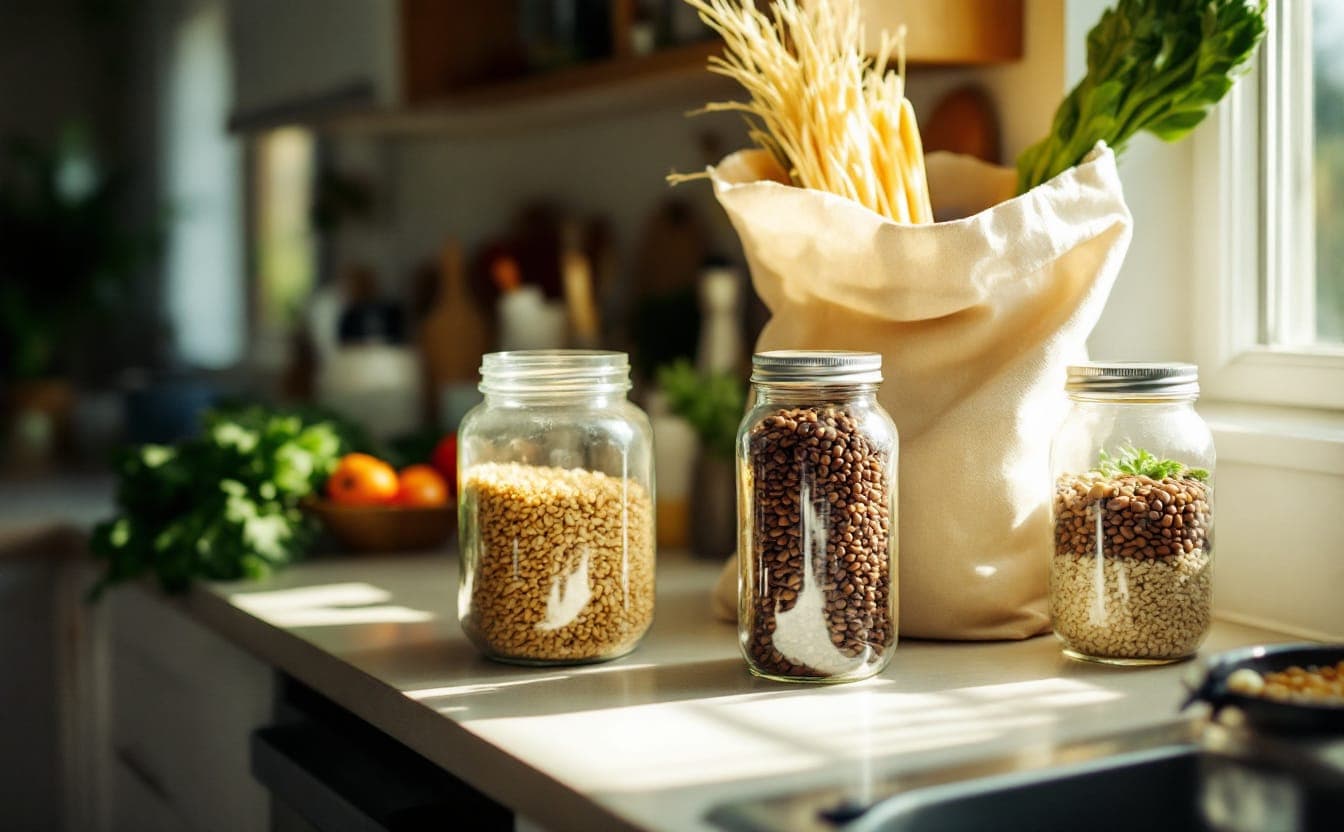
Open the cabinet under most kitchen sinks and you'll find the best low-waste product money never had to buy: a stack of washed yogurt and takeout containers. They hold leftovers, freeze soup, sort screws and carry lunch. They cost nothing because you already paid for them.
That stack is a good place to start, because much of what gets sold as "zero waste" is really a shopping list: glass jar sets, bamboo cutlery kits, beeswax wraps, specialty refill subscriptions. Some of those things are fine. None of them are required. If you rent, share a kitchen, or are feeding kids on a budget that leaves no room for experiments, the habits that cut waste the most tend to be the ones that also cut spending.
One more thing before the list. Plastic in your recycling bin is not a moral failing. The biggest levers on packaging waste sit with manufacturers and governments, which is why a handful of states, starting with Maine and Oregon in 2021, have passed laws making producers responsible for the packaging they put on the market. Personal habits still matter, mostly because they save you money and make your home easier to run. Do the ones that fit your life and skip the rest without guilt.
Three rules of thumb
- Use what you have first. The greenest container, bag or jacket is the one already in your home.
- Think in cost per use. A $3 thrifted pan used for ten years beats a $40 "sustainable" one you don't need.
- Prevent before you recycle. Food you don't throw out and things you don't have to replace save more than any sorting system.
The checklist
Food: where the real money is
Food is usually the biggest waste category a household can control, and the one with the biggest savings. The US Department of Agriculture has long estimated that 30 to 40 percent of the country's food supply goes uneaten. A share of that happens on farms and in stores, but a lot of it happens in home refrigerators.
- Shop your fridge before you shop the store. Take two minutes to see what needs eating, then plan two or three meals around it. Write the list on the back of an envelope and stick to it.
- Make an "eat this first" spot. One shelf or bin for food that's close to turning: half an onion, leftover rice, yogurt near its date. Everyone in the house knows to look there first.
- Learn what date labels mean. "Best by" and "sell by" dates are mostly about quality, not safety. According to the USDA's Food Safety and Inspection Service, infant formula is the only product where federal rules require a use-by date. Use your eyes and nose for the rest, and follow food safety guidance for meat, dairy and leftovers.
- Freeze more than you think. Bread, cooked beans and rice, ripe bananas, grated cheese, chopped herbs in a little oil, the last two portions of chili. Label the container with masking tape and a date.
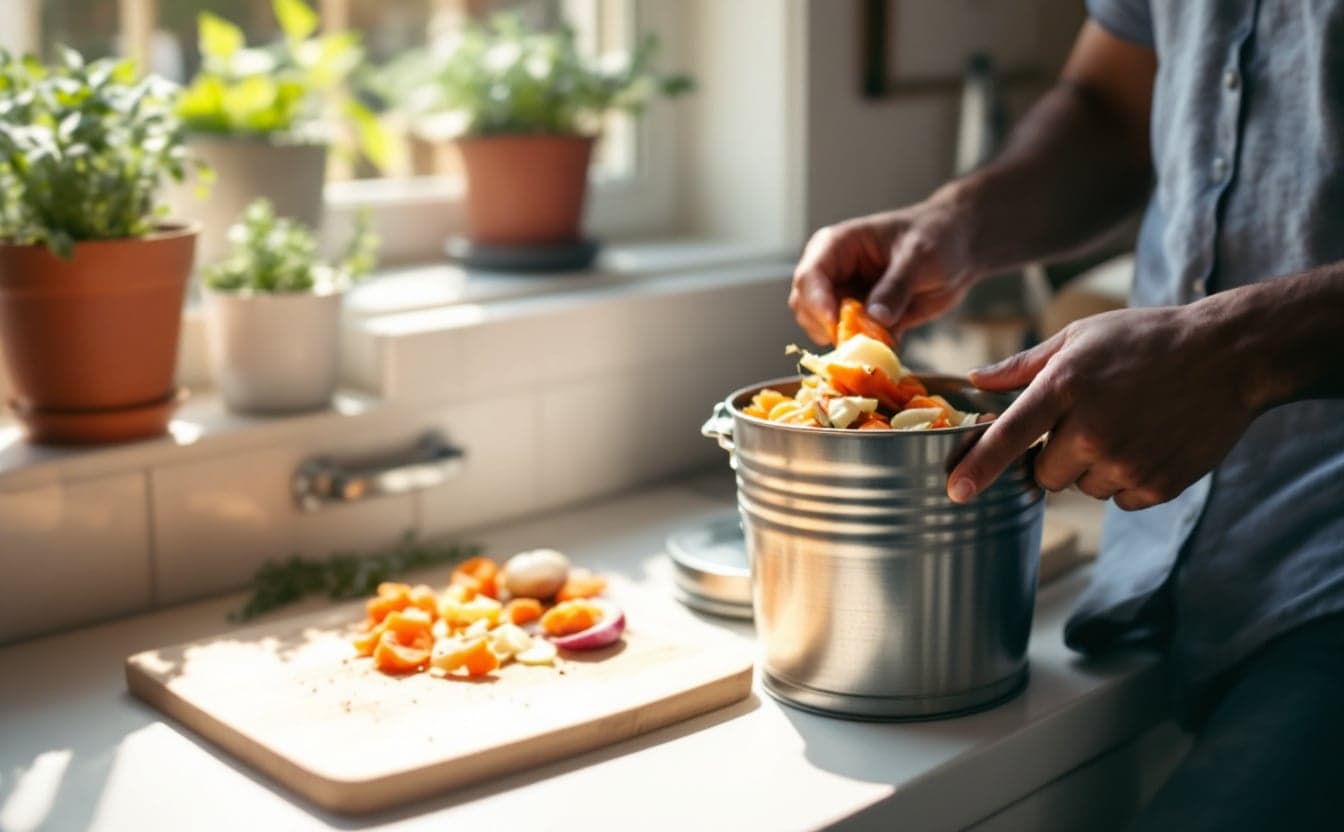
- Cook "scrap" meals once a week. Fried rice, frittata, soup, quesadillas and pasta bakes all absorb odds and ends. Vegetable trimmings can go in a freezer bag until there's enough for stock.
- Compare unit prices, not package sizes. Bulk bins are sometimes cheaper for spices, oats and dried beans, and sometimes not. A giant bag is only a deal if you finish it before it goes stale. Warehouse clubs can save money for big households, but count the membership fee and the extra trips.
- Treat refill shops as optional. Refill stores are great if one is near you and the prices work. Many are more expensive per ounce than the supermarket, so pick one or two items, such as dish soap, where the math holds up, and buy the rest wherever it's cheapest.
Stuff: borrow, fix and buy secondhand
- Check for a repair café. The idea started in Amsterdam in 2009, and volunteer-run repair events now happen in many US towns, often at libraries and community centers. You bring a broken lamp, a toaster, a torn jacket or a wobbly chair, and volunteers help you fix it, usually free. The international network at repaircafe.org lists events by location.
- Borrow tools instead of buying them. Tool libraries lend drills, ladders, carpet cleaners and garden tools for a small fee or none. Some public libraries run a "library of things" with sewing machines, canning pots, kids' games and camping gear. A drill you'll use twice a year is a good thing to borrow.
- Buy kids' clothes and gear secondhand. Children outgrow clothes long before they wear them out. Thrift stores, consignment sales, hand-me-down swaps and local Buy Nothing groups (a gift-economy model that started on Bainbridge Island, Washington, in 2013) are full of barely used items.
- Know which items to buy new. Skip used car seats unless you know their full history and they haven't expired, because crash damage can be invisible. Avoid old drop-side cribs, which federal safety rules banned in 2011, and replace bike helmets after any crash. Saving money is never worth compromising those.
- Repair before you replace. A $5 sewing kit, a tube of shoe glue and a few online tutorials will extend the life of a surprising amount of clothing. Many small appliance failures are a fuse, a cord or a clogged filter.
- Take free furniture, but inspect it. Curbside and online giveaways can furnish a whole apartment. Hard pieces like tables, shelves and dressers are the safest bets. Check upholstered furniture and mattresses carefully for signs of bed bugs (small dark spots along seams, shed skins) before anything comes through the door, because a treatment costs far more than a new couch.
Energy and water: what renters can actually do
Renters can't replace the furnace or install solar panels, but everyday choices still show up on the bill. Keep anything you change reversible so it doesn't cost you a security deposit.
- Wash clothes in cold water. Most of the energy a washing machine uses goes to heating water. Modern detergents clean well in cold for everyday loads.
- Air-dry when you can. A folding drying rack costs less than a few months of dryer use and fits in a corner.
- Turn the thermostat back. The Department of Energy says you can save up to about 10 percent a year on heating and cooling by setting the thermostat back 7 to 10 degrees Fahrenheit for eight hours a day, for example while everyone is asleep or out.
- Seal drafts cheaply. Draft stoppers under doors, removable rope caulk around windows and clear plastic window film kits all come off cleanly in spring. Heavy curtains help in both seasons.
- Swap bulbs as they burn out. Replace dead bulbs with LEDs, and take the LEDs with you when you move. Keep the old bulbs in a drawer if the lease expects them back.
- Change the showerhead (and keep the old one). A showerhead with the EPA's WaterSense label uses less water and less hot water. Store the original and reinstall it before you move out.
- Report leaks in writing. A running toilet or dripping faucet wastes a lot of water over a year, and on many leases the water bill is yours. A short email to the landlord creates a record.
- Ask about assistance and billing options. Many utilities offer budget billing, which evens out seasonal spikes, and discount programs for income-qualified households. Calling 211 can connect you with local energy and weatherization help where it exists.
Before you go
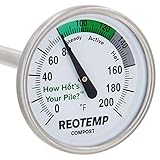 REOTEMP 20-inch compost thermometer$23.99 Amazon price, as of Oct 22, 2026, 4:26 PM UTCSee on Amazon
 Nalgene 32 oz wide-mouth bottle$16.05 Amazon price, as of Oct 22, 2026, 4:26 PM UTCSee on Amazon
 TP50 indoor thermometer and hygrometer$10.49 Amazon price, as of Oct 22, 2026, 4:26 PM UTCSee on Amazon
Product prices and availability are accurate as of the date/time indicated and are subject to change.
Gear links may earn us a commission. As an Amazon Associate I earn from qualifying purchases.
What to skip
Some "eco" purchases save money and resources. Others mostly transfer money from your wallet to a brand. A short list of things you can pass on without a second thought:
Starter kits and matching sets. Glass jar collections, bamboo utensil sets and curated "zero waste kits" are nice to look at. A jar from pasta sauce does the same job.
More reusable bags. If you already own several, you don't need another. Life-cycle studies, including a 2018 assessment from Denmark's environmental agency, have found that cotton totes need to be reused a very large number of times before they come out ahead of thin plastic bags. The bag you already have is the low-impact one.
Single-use "compostable" plates and cutlery. Many end up in landfills anyway, because few local composting programs accept them. Washable dishes cost less over time.
Specialty cleaning products. Dish soap, vinegar and baking soda handle most household cleaning. One safety rule: never mix bleach with vinegar or ammonia, because the combinations release toxic gases.
Replacing working things early. Swapping your plastic food containers for glass, or your perfectly good water bottle for a newer one, creates waste. Use what you have until it's worn out.
Where to start this week
Pick two items from the list, not twenty. For most households, the "eat this first" shelf and a weekly check of the fridge will save more money in a month than anything else here. If you rent, add a cold-water wash and a draft stopper under the front door before the next utility bill.
Give each change a few weeks before you judge it. Habits that stick are usually the ones that make the week easier, not harder. If a routine adds stress, drop it and try a different one. A household that keeps up three small changes for a year will save more, and throw away less, than one that tries everything in January and gives up by March.
If you want to go further, the stories archive collects our other pieces on sustainable communities and everyday choices, and our annotated resource list points to longer reading. For the bigger picture beyond the household, the organizations we profile are working to widen access to parks, the outdoors and environmental careers.
Gear links may earn us a commission. As an Amazon Associate I earn from qualifying purchases.
Pack list for home
- VIVOSUN dual-chamber compost tumbler 43 galTwo chambers: one batch finishes while you fill the other, and a few turns mix the pile.$67.99 Amazon price, as of Oct 22, 2026, 4:26 PM UTCSee on Amazon
- REOTEMP 20-inch compost thermometer 20 in stemA long stem reaches the middle of the pile, where the heat tells you it is working.$23.99 Amazon price, as of Oct 22, 2026, 4:26 PM UTCSee on Amazon
- Nalgene 32 oz wide-mouth bottle about 6 ozClose to indestructible, easy to fill from a filter pouch, marked in ounces and milliliters.$16.05 Amazon price, as of Oct 22, 2026, 4:26 PM UTCSee on Amazon
Product prices and availability are accurate as of the date/time indicated and are subject to change.
Next: try the Compost Calculator or browse the full Pack list.