Enter the length and width of the bed or lawn, choose how deep the compost should go and the bag size sold near you. You get cubic yards for a bulk order, cubic feet, liters and a bag count.
From square feet to cubic yards
Compost is bought by volume, so the job is area times depth. Depth comes in inches and area in square feet, which is why the calculator divides by 12:
cubic feet  = length (ft) × width (ft) × depth (in) ÷ 12
cubic yards = cubic feet ÷ 27
bags        = cubic feet ÷ bag size, rounded up
A cubic yard is 27 cubic feet. Spread 1 inch deep, it covers 324 square feet (27 × 12). At 2 inches it covers 162 square feet, and at 3 inches, 108. The liters figure uses 28.3 liters per cubic foot. Bag counts round up because nobody sells two-thirds of a bag.
A 10-by-4 bed, worked through
The calculator opens on a common raised bed: 10 feet long, 4 feet wide, compost mixed in 2 inches deep, sold in 1.5-cubic-foot bags.
- Area: 10 × 4 = 40 square feet.
- Volume: 40 × 2 ÷ 12 = 6.67 cubic feet, shown as 6.7 cubic feet (about 189 liters).
- In yards: 6.67 ÷ 27 = 0.25 cubic yards.
- In bags: 6.67 ÷ 1.5 = 4.4, rounded up to 5 bags.
Five bags fit in a hatchback or a shopping cart, which makes bags the sensible choice here. A lawn changes the picture. Top-dressing 2,000 square feet at a quarter inch takes 1.54 cubic yards, or 28 of those same bags. That is a lot of lifting, plastic and trips, and it is the point where a bulk load starts to make sense. Past about 2 cubic yards, a delivery from a landscape yard or a municipal compost site usually beats bags on cost, even with the delivery fee.
Picking the depth
The four depth settings follow the ranges extension services and the EPA give for home use:
| Setting |
When to use it |
| 1/4 inch |
Top-dressing a lawn, ideally right after core aeration or before overseeding |
| 1 inch |
A yearly layer on an established bed |
| 2 inches |
Mixing into a new bed |
| 3 inches |
Reworking poor, compacted or sandy soil |
The EPA's guide to composting at home suggests mixing 2 to 4 inches of compost into the top 6 to 9 inches of soil when you use it as an amendment. For established beds, Oregon State University Extension recommends a quarter inch to 1 inch a year, and a quarter to half an inch on lawns. The same guide warns against piling it on: too much compost can stress plants with salts and let phosphorus wash into streams. When in doubt, choose the shallower setting and add more next season.
Where to get it without overspending
Before buying anything, check your city or county. Many yard-waste programs sell finished compost at low cost or give it away at a drop-off site, as long as you bring your own buckets or a truck. Community gardens often split a bulk delivery among plots, which gets apartment gardeners the bulk rate without a driveway to dump it on. If you buy bagged or bulk compost, the US Composting Council's Seal of Testing Assurance on the label means the producer sends samples to a lab on a regular schedule and shares the results with buyers.
Gear links may earn us a commission. As an Amazon Associate I earn from qualifying purchases.
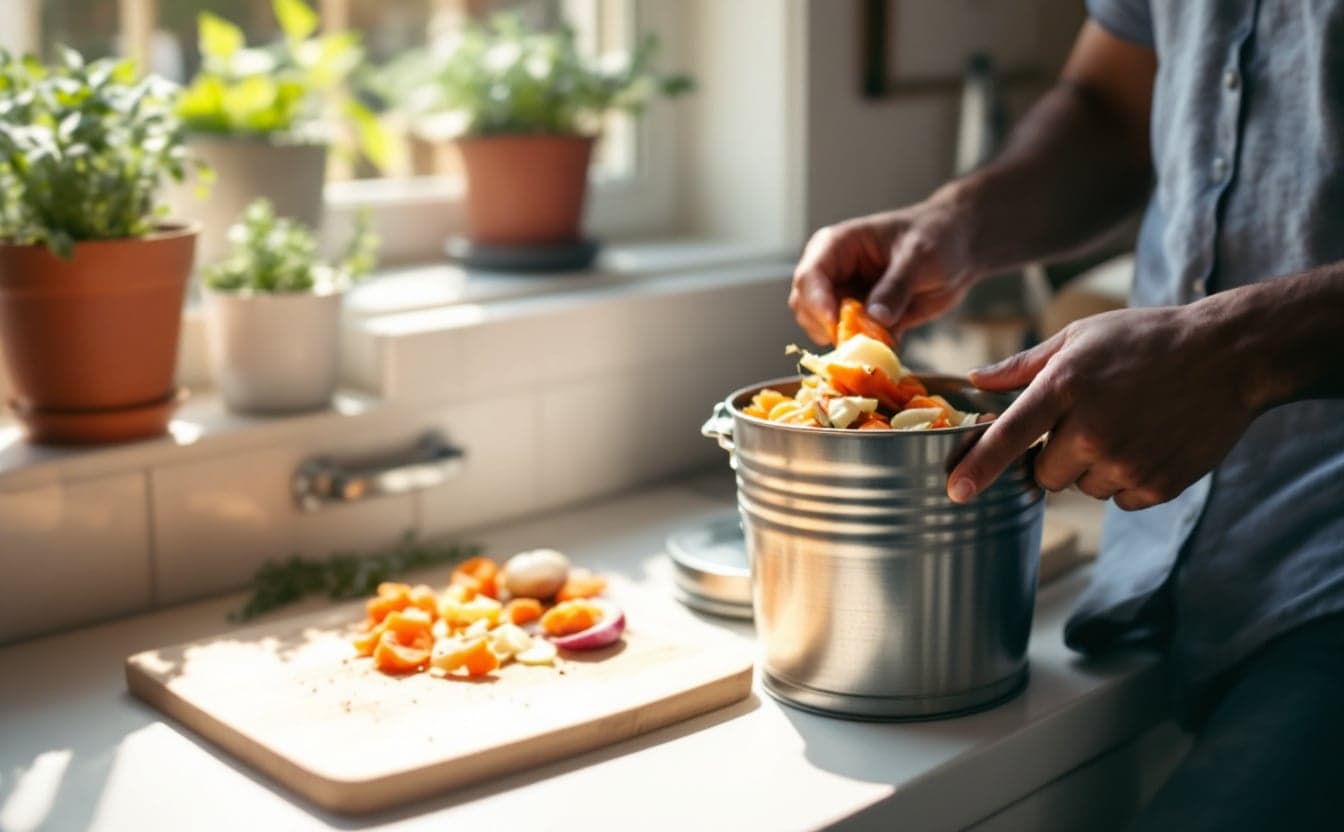
Making your own takes patience and covers smaller jobs. Scraps shrink a lot as they break down: a full 43-gallon tumbler holds about 5.7 cubic feet of raw material and yields well under the 6.7 cubic feet our sample bed needs. Home compost works best as a yearly top-up, with bought or city compost for big projects. A countertop pail by the sink makes the daily trip outside easier, and a long thermometer tells you whether the pile is hot enough to break down quickly.
Pack list
- VIVOSUN dual-chamber compost tumbler 43 galTwo chambers: one batch finishes while you fill the other, and a few turns mix the pile.$67.99 Amazon price, as of Oct 22, 2026, 4:26 PM UTCSee on Amazon
- REOTEMP 20-inch compost thermometer 20 in stemA long stem reaches the middle of the pile, where the heat tells you it is working.$23.99 Amazon price, as of Oct 22, 2026, 4:26 PM UTCSee on Amazon
- OXO Good Grips Easy-Clean compost bin 1.75 galSmooth plastic inside and a lid that comes off, so rinsing it takes seconds.$29.00 Amazon price, as of Oct 22, 2026, 4:26 PM UTCSee on Amazon
Product prices and availability are accurate as of the date/time indicated and are subject to change.
Everything on our Pack list
We chose these from the makers' published specs and from reviews and owner reports, without hands-on trials.
Wasting less food in the first place saves more than any pile, and our guide to low-waste living on a tight budget starts with the fridge. If you are feeding the same beds from a roof, the rain barrel calculator shows how much water one storm can store for them. Community gardens, like the ones in our story on immigrant seed savers, are also good places to split a compost delivery.
Questions
How much area does a cubic yard of compost cover?
One cubic yard covers 324 square feet at 1 inch deep, 162 square feet at 2 inches and 108 square feet at 3 inches. At a quarter inch, the usual depth for top-dressing a lawn, it covers about 1,300 square feet.
How many bags of compost make a cubic yard?
A cubic yard is 27 cubic feet. That works out to 27 bags of 1 cubic foot, 18 bags of 1.5 cubic feet, or about 14 bags of 2 cubic feet.
How deep should compost be in a garden bed?
For a new bed, the EPA suggests mixing 2 to 4 inches of compost into the top 6 to 9 inches of soil. Established beds usually need only a quarter inch to 1 inch spread on top each year.
Is bulk compost or bagged compost better?
The material can be the same; the difference is quantity and handling. Bags suit small beds, balconies and anyone without a truck, while bulk delivery usually costs less once a job passes about 2 cubic yards.
Can you put too much compost on a garden?
Yes. Heavy or repeated applications can raise salt levels enough to stunt plants and can let phosphorus and potassium leach into groundwater and streams. A thin yearly layer is safer than a thick one.