
Birdwatching for Beginners: Start Close to Home With Free Tools
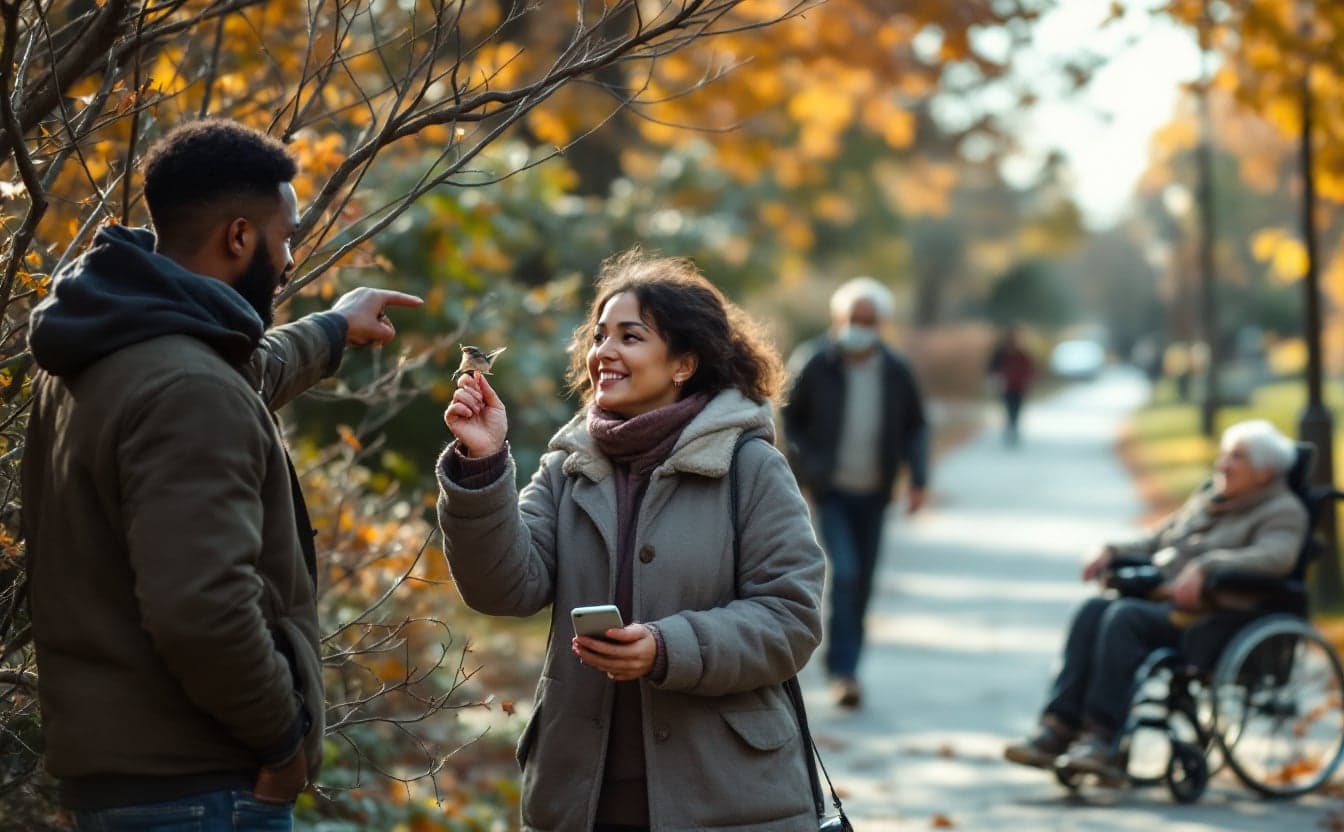
Long before you learn a single bird by sight, you have learned a few by ear without trying. The cooing from the ledge above the bus stop. The chatter in the hedge outside the laundromat. The harsh call of a blue jay in October, loud enough to cut through traffic. Birding starts there, with birds you already live beside and attention you already have.
That is the good news for anyone looking up birdwatching for beginners: the entry fee is close to zero. You do not need binoculars on day one, a car or a field trip. You need ten minutes, a place to stand or sit, and a free app on your phone. Everything else (a borrowed pair of binoculars, a field guide, a group to walk with) can come in its own time.
Gear links may earn us a commission. As an Amazon Associate I earn from qualifying purchases.
Trail-ready picks
 Any weatherCelestron Nature DX 8x42A widely recommended first pair: waterproof, with a close focus for birds at the feeder.See on Amazon
 Any weatherSibley field guide, eastern North AmericaPainted plates of every regular eastern species, with the field marks pointed out.See on Amazon
 Any weatherSibley field guide, western North AmericaThe western companion, for birders west of the Rockies.See on Amazon
Start at the window and on your own block
Pick one spot you can return to every day: a kitchen window, a balcony, a stoop, the bench at your bus stop. Spend ten minutes there, at about the same time each day if you can. Early morning is the busiest hour for birds, but late afternoon works too.
At first you will see the same handful of birds. That is the point. Learning pigeons, sparrows, starlings, mourning doves and crows well gives you a yardstick for everything that comes after. When something new shows up, you will notice it, because it does not look or act like the regulars.
If you want birds to come to you, a small feeder helps, and so does a pot of native flowers left to go to seed. Two cautions. Place a feeder either within 3 feet of a window or more than 30 feet away, which reduces deadly window strikes, and wash it every couple of weeks so it does not spread disease. Renters can hang a small feeder from a balcony railing, if the lease and the neighbors allow it.
From there, widen the circle to the nearest park, schoolyard edge, cemetery or riverside path. Ordinary city green space holds more birds than most people expect, especially during spring and fall migration, when birds on the move stop wherever they find trees, water and food.
What to notice before you reach for a name
Beginners often try to match a bird to a picture right away. Experienced birders gather clues first and name the bird second. These six clues, roughly in the order you can see them, will get you most of the way.
- Size: compare it with birds you know. Sparrow-sized, robin-sized, crow-sized.
- Shape: a thick seed-cracking bill or a thin, pointed one? A long tail or a stubby one? Upright posture, or horizontal?
- Behavior: does it hop or walk? Creep up a tree trunk? Flick its tail? Hover over water before it dives?
- Habitat: where exactly is it? On the ground under shrubs, high in the canopy, on open water, on a mudflat?
- Field marks: the specific patterns that separate similar species, such as stripes on the wings (wing bars), a ring around the eye, a stripe over it, streaks on the breast, white in the tail.
- Sound: a song, a chip, a scold. Many birds are heard long before they are seen, and some similar-looking species are easiest to tell apart by voice.
Say the clues out loud or jot them in a notebook. "Robin-sized, gray, long tail, sitting on a wire, sings a messy string of phrases" is enough to narrow a field guide to a page.
Before you go
 TrailBuddy aluminum trekking polesSee on Amazon
 Columbia Watertight II rain jacket (men's)See on Amazon
 SKYSPER 20-liter daypackSee on Amazon
Gear links may earn us a commission. As an Amazon Associate I earn from qualifying purchases.
Two free apps that do a lot of the work
Merlin Bird ID, from the Cornell Lab of Ornithology, is the app most birders now recommend first. It can identify birds from their songs as you record (Sound ID), from a photo, or from your answers to a few questions about size, colors, place and date. Download the bird pack for your region and it works without a cell signal. Treat Sound ID's suggestions as leads, not verdicts, and try to see the bird when you can; the app is good, but traffic noise and mimics can fool it.
eBird, also free from Cornell, is where you keep track of what you see. You submit a checklist for each outing: where you went, how long you looked, and what you found. Over time it becomes your own record, and it also feeds a huge dataset scientists use to follow bird populations. Its hotspot pages show what others have reported at a park this week, which is the easiest way to learn what is around right now.
What to bring, and what to skip
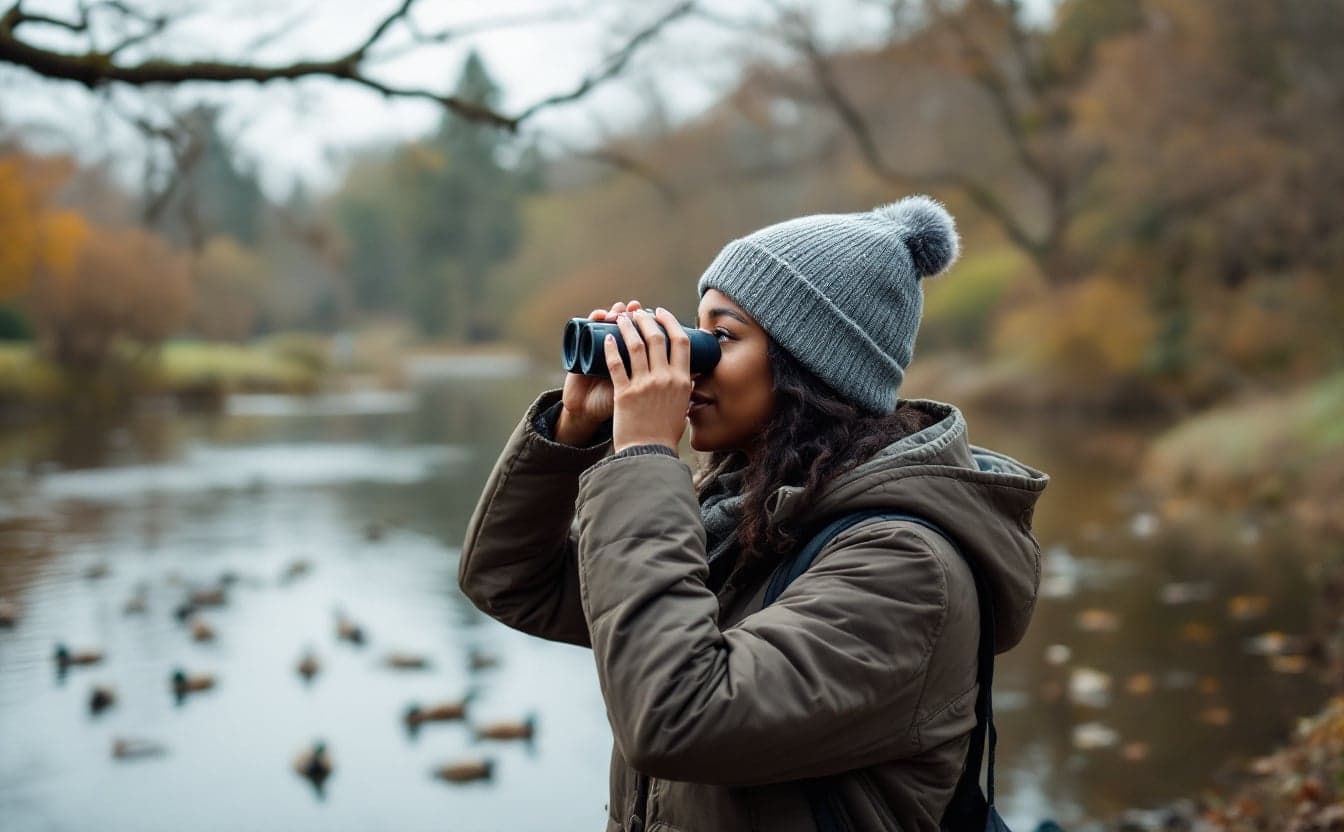
For the first few weeks, a phone and a notebook are plenty. When you are ready for binoculars, borrow before you buy. Many libraries lend birding backpacks with binoculars and a field guide, and many Audubon chapters bring loaner pairs on beginner walks. Our guide to choosing binoculars for bird watching explains why an 8x42 pair suits most beginners and how to set the focus so both eyes see a sharp image.
If you do buy, a widely recommended first pair is the Celestron Nature DX 8x42: waterproof, comfortable with glasses, and able to focus on a bird at the feeder a few feet away. A paper field guide is the other worthwhile purchase, because it puts look-alike species side by side. David Sibley's guide to eastern North America is painted, with the key field marks pointed out on each bird. These suggestions rest on makers' specifications, published reviews and owners' long-term reports, not on trials of our own.
Pack list
- Celestron Nature DX 8x42 about 1.4 lbA widely recommended first pair: waterproof, with a close focus for birds at the feeder.See on Amazon
- Sibley field guide, eastern North AmericaPainted plates of every regular eastern species, with the field marks pointed out.See on Amazon
- Sibley field guide, western North AmericaThe western companion, for birders west of the Rockies.See on Amazon
You need only one of the two Sibley guides: the eastern one or the western one, depending on where you live.
Skip camouflage clothing, an expensive camera and any speaker for playing bird calls. Muted colors are plenty, and the camera can wait until you know what you want to photograph.
Birding without a car
Some of the best birding in the country is a bus ride from downtown. City parks with mixed trees and water, older cemeteries with big shade trees, waterfronts, college campuses, rail trails and even stormwater ponds draw birds, and most of them sit on transit lines. During migration, small urban parks can fill with warblers that are simply looking for the nearest green patch.
Many birders choose a "patch," one place within walking or transit distance that they visit again and again. A patch rewards repetition. You learn which tree the kinglets favor, when the ducks arrive and leave, and what is new on a given morning. It also takes the pressure off chasing birds across the region.
Getting farther out is easier than it used to be in some places. Our story on transit-to-trails programs covers the buses and shuttles some regions now run to parks and preserves. Where none exist, a bird club walk is often the easiest way to share a ride.
Birding with a disability
Birding adapts well to many kinds of bodies, and much of it can be done from one spot. A bench, a folding stool, a parked car or a wheelchair at the edge of a pond can be a fine place to watch birds come and go. Birding by ear, with or without Merlin's help, opens the hobby to blind and low-vision birders and to anyone who cannot hold binoculars steady for long. A harness instead of a neck strap takes weight off the neck and shoulders.
Birdability was founded by Virginia Rose, a retired English teacher, wheelchair user and longtime birder. It keeps a crowdsourced map of birding sites with notes on parking, restrooms, slopes, surfaces and gates, and publishes guidance for leading outings that welcome people with disabilities, chronic illness, neurodivergent birders and blind and low-vision birders. Before a group walk, it is reasonable to ask the leader about distance, surfaces, restrooms and how often the group stops. Good leaders are glad you asked.
Good manners in the field
Birds do not owe us a look, and a good birder makes sure the bird pays no price for being seen. The American Birding Association's Code of Birding Ethics is the standard most clubs follow. The short version:
- Keep your distance: if a bird stops feeding, flushes or keeps watching you nervously, you are too close. Step back.
- Leave nests alone: be especially careful around active nests, roosts and nesting colonies, and do not move branches for a better view or photo.
- Go easy on playback: playing recorded calls to draw birds in can stress them. The code asks birders to limit it, especially in heavily birded spots and for rare, threatened or endangered species.
- Keep sensitive locations quiet: many birders do not post the exact location of roosting owls or nesting rare birds, because crowds can drive them off.
- Respect people and property: stay on trails, ask before entering private land, and be mindful in residential areas; point binoculars at trees, not windows.
Find your people
Birding alone is restful. Birding with others is how most people learn fastest, because someone else can point out the chip note or the field mark you missed.
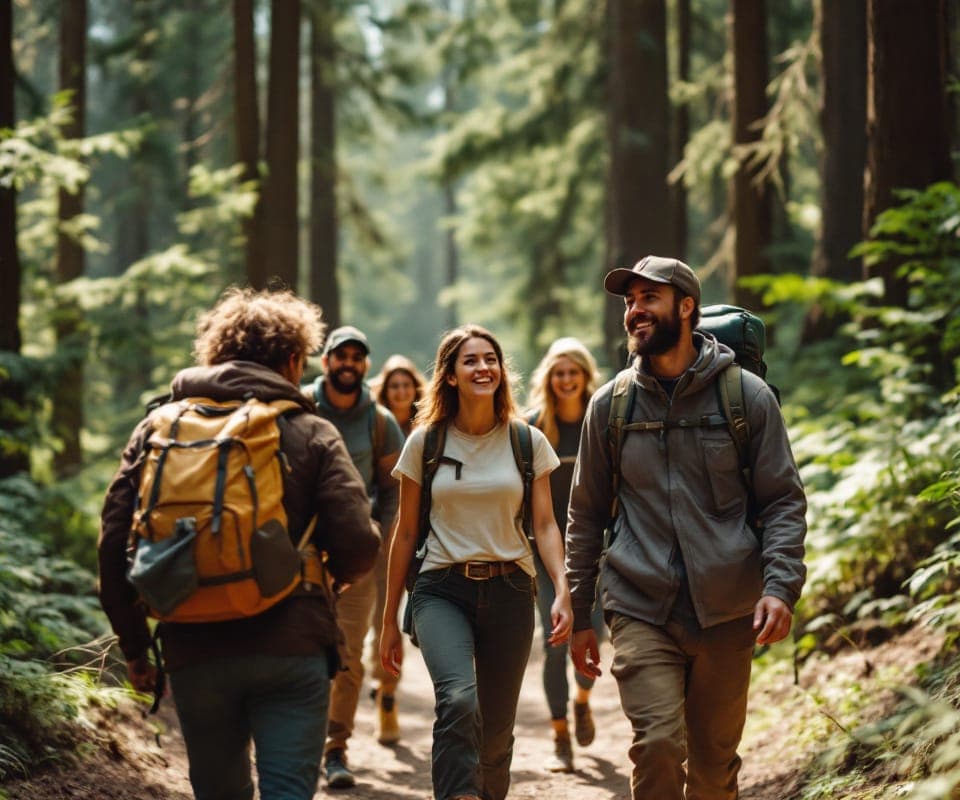
Start with your local Audubon chapter or bird club. Most run free walks, many specifically for beginners, and many lend binoculars. Libraries and nature centers often host walks too.
Some groups were started to make birding feel welcoming to people who had not felt welcome in it. The Feminist Bird Club began in New York City in 2016, founded by Molly Adams, and has grown into chapters across North America and beyond, with outings meant to give women, LGBTQIA+ people and Black, Indigenous and other people of color a safe, welcoming way into birding. Black Birders Week was launched in late spring 2020 by the BlackAFinSTEM collective, a group of Black scientists and naturalists, after a white woman called the police on Christian Cooper, a Black birder, in Central Park. It has continued as a yearly celebration of Black birders and naturalists, with online events and walks in many cities. Search your city's name with "BIPOC birding" or "bird club" and you will often find a local group as well.
Show up, tell the leader you are new, and ask questions. Nobody minds. Every person on that walk was once the one asking what that little brown bird was.
A first-month plan
If you start this week, November is a fine month to learn in. Leaves are down, so birds are easier to see, and winter visitors are arriving.
Week 1: one spot, ten minutes a day
Watch from your window or your patch. Learn five birds you see daily well enough to name them at a glance. Notice what time of day is busiest.
Week 2: add sound
Install Merlin and download your region's bird pack. Run Sound ID for a few minutes each morning and listen for the birds it names. Try to match one song to one bird you can see.
Week 3: add other people
Join a beginner walk with a bird club, an Audubon chapter or a group like the Feminist Bird Club. Borrow binoculars if you have none. That evening, enter what you saw as your first eBird checklist.
Week 4: go back and compare
Return to your patch and look for newcomers. In much of the country, dark-eyed juncos show up under shrubs this time of year, and in the East, white-throated sparrows join them. Count how many species you have learned in a month. Twenty is a strong start.
After that, look ahead to late December. The Audubon Christmas Bird Count runs every year from December 14 to January 5, and most count circles welcome beginners alongside experienced birders. It is a good way to spend a winter morning outdoors with people who will happily teach you a dozen new birds before lunch, and a reminder that the neighborhoods where we live are part of the map. Our story on park access by ZIP code looks at why some of those neighborhoods have far more green space than others.
Next: try the Hiking Time Calculator or browse the full Pack list.