What to Pack for a Day Hike: The Ten Essentials and a Real Checklist
The short answer first. For a day hike of a few hours on a marked trail, carry water (about half a liter, a little over a pint, for every hour you expect to be out in mild weather, and more in heat), more food than you plan to eat, a rain shell and one warm layer, a map that works without a signal, a headlamp, a small first-aid kit, sun protection, and a way to wait out a problem safely. All of it fits in a daypack of 15 to 25 liters.
That list is the Ten Essentials with the jargon taken out. Below, each item gets a line on what it is actually for, followed by water and food math, and then the changes that matter for heat, cold, kids and hikes that start at a bus stop.
Gear links may earn us a commission. As an Amazon Associate I earn from qualifying purchases.
Trail-ready picks
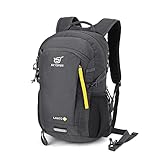 Any weatherSKYSPER 20-liter daypackA light, packable 20-liter bag with bottle pockets; plenty for a day on the trail.$43.99 Amazon price, as of Oct 22, 2026, 4:26 PM UTCSee on Amazon
 Hot daysNalgene 32 oz wide-mouth bottleClose to indestructible, easy to fill from a filter pouch, marked in ounces and milliliters.$16.05 Amazon price, as of Oct 22, 2026, 4:26 PM UTCSee on Amazon
 Hot daysSawyer Squeeze water filterScrews onto a pouch or bottle and filters stream water against bacteria and protozoa.$45.95 Amazon price, as of Oct 22, 2026, 4:26 PM UTCSee on Amazon
Product prices and availability are accurate as of the date/time indicated and are subject to change.
Where the Ten Essentials came from
The list began with The Mountaineers, the Seattle climbing club, whose climbing courses in the 1930s taught students to carry a short set of items that could get them through an unplanned night. It was written down formally in the third edition of the club's textbook, Mountaineering: The Freedom of the Hills, in 1974. Later editions swapped single objects for ten "systems," so "map and compass" became navigation and "matches" became fire. That change left room for a phone app or a lighter. The National Park Service lists the same ten and credits The Mountaineers for them.
The list was built around one scenario: a small problem that stretches past dark. A wrong turn at a junction, a rolled ankle two miles from the car, a thunderstorm that arrives at 2 p.m. None of these are emergencies at noon with a full water bottle. They become one at 7 p.m. in a cotton T-shirt with no light. Most of what follows exists so you can wait a few hours, warm and visible, for help or for morning.
The checklist, line by line
Print this table or screenshot it. The right-hand column is the version that makes sense for a day on the trail, which is lighter than what a climber or backpacker carries.
| Bring | What it's for | Day-hike version |
|---|---|---|
| Navigation | Knowing which way to go when the trail splits, a sign is missing or fog rolls in | A paper map or a printed page, plus the route downloaded to your phone for offline use. A compass if you know how to use one |
| Water, and a way to treat more | Staying hydrated; refilling on long or hot routes | Bottles or a reservoir with enough for the whole hike, plus a filter if the route passes reliable water |
| Extra food | Energy, and a buffer if the day runs long | Snacks for the plan plus one "just in case" item that stays in the pack |
| Extra layers | Rain, wind, and the chill that hits when you stop | A rain shell and one warm layer; a hat and light gloves outside summer |
| Light | Walking out after dark | A headlamp with a full charge or spare batteries. A phone flashlight drains the phone you may need for a call |
| First aid | Blisters, scrapes, stings, small cuts, sprains | A small kit, plus a full extra day of any medicine you take |
| Sun protection | Sunburn, glare, heat | Sunscreen, sunglasses, a brimmed hat, lip balm with SPF |
| Fire | Warmth and signaling in an emergency | A lighter and two or three fire starters in a zip bag, for emergencies only and only where fires are allowed |
| Repair kit and tools | Broken straps, a blown-out shoe, splinters | A small knife or multi-tool and a few feet of duct tape wrapped around a bottle |
| Emergency shelter | Staying warm and dry if you have to wait | A space blanket or emergency bivy, a few ounces |
A few things that aren't on the official ten but earn a place: a whistle (three blasts is the standard call for help, and it carries farther than a voice), a charged phone with a small battery pack, your ID and health insurance card, toilet paper with a zip bag to pack it out, hand sanitizer, and a spare pair of socks.
If you skip anything, people tend to skip the headlamp and the emergency shelter, because a sunny morning makes both feel silly. They weigh almost nothing. Leave them in the pack permanently so the decision never comes up.
Before you go
 Columbia Watertight II rain jacket (men's)$70.00 Amazon price, as of Oct 22, 2026, 4:26 PM UTCSee on Amazon
 Lepro rechargeable headlamp$18.99 Amazon price, as of Oct 22, 2026, 4:26 PM UTCSee on Amazon
 Adventure Medical Kits Ultralight/Watertight .5$31.95 Amazon price, as of Oct 22, 2026, 4:27 PM UTCSee on Amazon
Product prices and availability are accurate as of the date/time indicated and are subject to change.
Gear links may earn us a commission. As an Amazon Associate I earn from qualifying purchases.
How much water to bring
A workable planning rate is about half a liter per hour of hiking in mild weather, about three-quarters of a liter when it's warm, and up to a liter an hour in real heat. The Park Service gives similar numbers for desert hiking: half a quart to a quart for every hour on the trail. Steep climbs, a heavy pack and a bigger body all push the number up.
The hard part is guessing the hours. Our hiking time calculator uses Naismith's rule (an hour for every 3 miles plus an hour for every 2,000 feet of climbing) and then turns the time into liters for your group. A 6-mile loop with 1,500 feet of climbing works out to about 3 hours with short rests. That's roughly 1.5 liters per person on a cool day and about 2.3 liters on a warm one.
A few habits help more than extra bottles:
- Drink a full glass before you start, so you begin topped up.
- Sip every 15 to 20 minutes instead of gulping at the summit. People who carry a hydration pack with a drinking tube tend to drink more steadily, simply because they never have to stop and dig.
- On long, hot days, eat salty snacks along with your water or add an electrolyte mix. Large amounts of plain water with no food over many hours can dilute the body's sodium.
- Turn around if you've drunk half your water and you're not yet halfway.
If the route passes a stream or lake you trust, you can carry less and refill. A squeeze-style filter handles bacteria and protozoa such as Giardia, but not viruses; chemical tablets or boiling cover those. A tiny backup like the Sawyer Mini rides in a hip pocket. Don't plan around seasonal creeks in late summer without asking a ranger whether they're still running.
Food that holds up in a pack
Plan on a snack every hour or so. Roughly 200 to 300 calories an hour on the move is a common guideline for adults on a moderate hike, and it's easier to hit with several small things than one big lunch.
The best trail food doesn't melt, crush or need a fork. Trail mix and granola bars are the default, but plenty of other foods work as well or better: rice balls wrapped in seaweed, tortillas rolled with peanut butter and banana, cheese and crackers, dried mango, leftover empanadas or samosas, boiled eggs on a cool day, pita and hummus. Pack a mix of salty and sweet, since appetite changes as you tire.
Keep one extra item, a bar or a bag of nuts, that never comes out unless the hike goes long. Pack out every wrapper and every peel. Orange and banana peels take a long time to break down on a dry trail, and they teach animals to look for food near people.
Layers you want even on a sunny day
Air usually cools by 3 to 5 degrees Fahrenheit for every 1,000 feet you climb, and a ridge can be windy when the parking lot is still. The moment you stop for lunch, the sweat on your back starts working against you.
For most day hikes outside summer, that means a base you can sweat in (a synthetic or wool shirt rather than cotton), a warm layer such as a fleece or a light puffy, and a rain shell that also blocks wind. Add a warm hat and thin gloves from fall through spring. Jeans and cotton hoodies are fine on a dry, short walk, but they hold water and stay cold once they're wet, which is exactly the situation the Ten Essentials plan for.
A pack list to start from
These cover the core of the checklist for one hiker. We chose them by reading makers' specifications, published reviews and owner feedback, without hands-on trials of our own. Borrowed or secondhand versions of any of them work just as well.
Pack list
- SKYSPER 20-liter daypack 20 LA light, packable 20-liter bag with bottle pockets; plenty for a day on the trail.$43.99 Amazon price, as of Oct 22, 2026, 4:26 PM UTCSee on Amazon
- Nalgene 32 oz wide-mouth bottle about 6 ozClose to indestructible, easy to fill from a filter pouch, marked in ounces and milliliters.$16.05 Amazon price, as of Oct 22, 2026, 4:26 PM UTCSee on Amazon
- Sawyer Squeeze water filter about 3 ozScrews onto a pouch or bottle and filters stream water against bacteria and protozoa.$45.95 Amazon price, as of Oct 22, 2026, 4:26 PM UTCSee on Amazon
- Lepro rechargeable headlamp about 2.7 ozCharges by USB and has a red mode that keeps your night vision.$18.99 Amazon price, as of Oct 22, 2026, 4:26 PM UTCSee on Amazon
- Adventure Medical Kits Ultralight/Watertight .5 about 3.5 ozTrail first aid for one or two people in a waterproof pouch.$31.95 Amazon price, as of Oct 22, 2026, 4:27 PM UTCSee on Amazon
- Columbia Watertight II rain jacket (men's) about 8 ozA light waterproof shell that packs small; the layer that saves a cold, wet day.$70.00 Amazon price, as of Oct 22, 2026, 4:26 PM UTCSee on Amazon
Product prices and availability are accurate as of the date/time indicated and are subject to change.
If your knees complain on the way down, a pair of lever-lock trekking poles is the next thing worth adding. They take some of the pounding off the descent and give you two extra points of contact on rocks and stream crossings.
Changing the list for the day you're having
Heat
Start early, on the trail by 7 or 8 a.m. in summer if you can, and plan to be off exposed sections by midday. Carry the hot-weather rate of water, plus a little more. Wear a brimmed hat and loose, light-colored long sleeves, which shade better than sunscreen alone. Wet a bandana at every stream and wear it on your neck. Check the heat index for the trailhead before you leave with our heat index calculator, and pick a shaded, shorter route when it's high. Heat illness can turn serious quickly: confusion, fainting or hot skin that has stopped sweating means call 911.
Cold
Daylight is the limiting factor in winter, so the headlamp matters more than ever. Add a warm layer you can wear while stopped, a spare hat and gloves, and a thermos of something hot. Water bottles freeze from the top, so carry them upside down in the pack so the lid end stays liquid; drinking tubes freeze fast in the cold, so bottles work better. Traction devices that slip over boots make icy trails far safer.
Kids
Give each child a small pack with their own water, a snack, a whistle and a bright layer, so they carry something and feel in charge of it. Teach the rule that if they get separated, they stop, stay put and blow the whistle, and adults come to them. Plan on half the distance you'd do alone and twice the snacks. A short trail with a creek, a bridge or a lookout beats a long one with a view at the very end.
Hikes that start at a bus or train stop
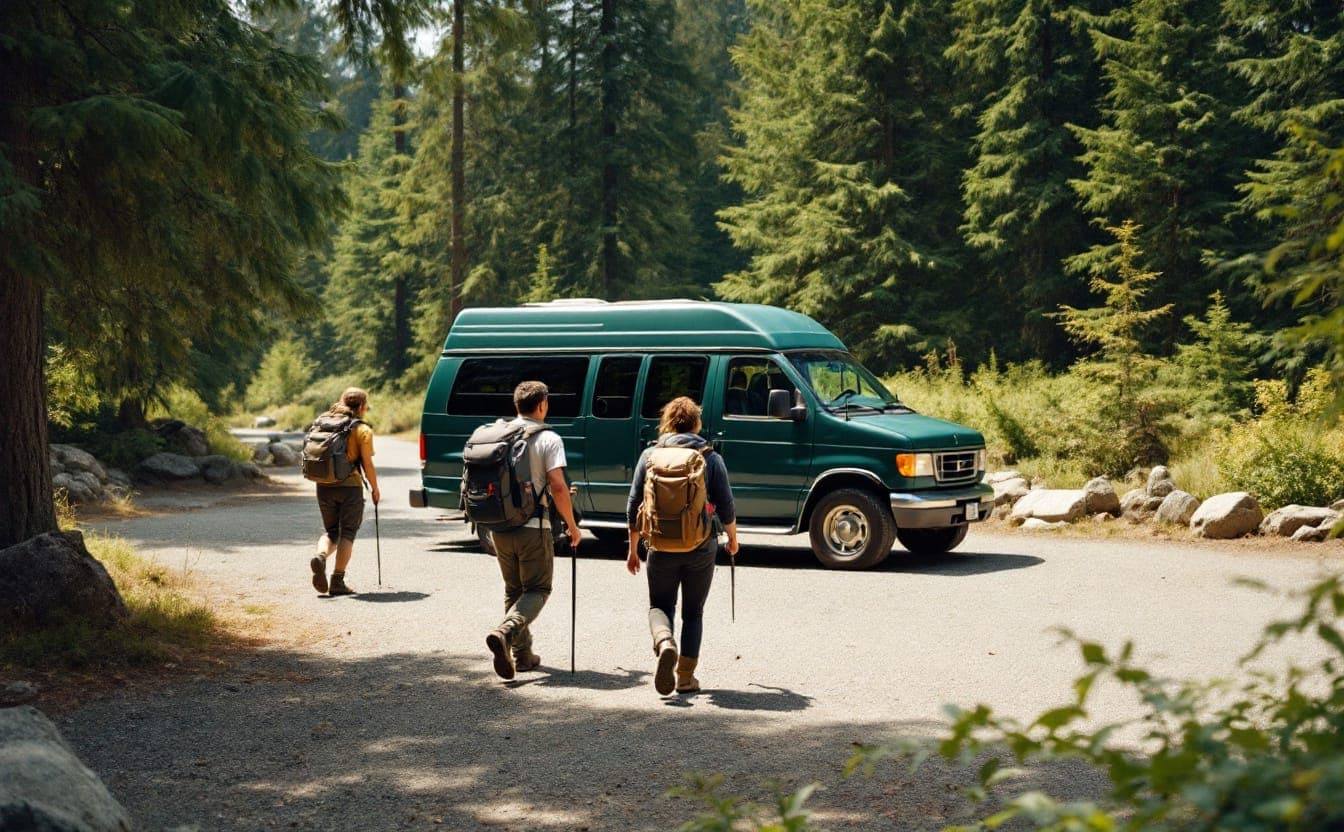
Hiking without a car changes the list in useful ways. You carry everything all day, since there's no trunk to stash a change of clothes, so pack a dry shirt in a bag for the ride home. Screenshot the timetable, because trailhead signal is unreliable. Note the last departure and set your turnaround so you reach the stop 30 minutes early. Bring a battery pack if you're relying on your phone for the transit app as well as the map. Our story on transit to trails programs covers the shuttles and weekend routes that make car-free hiking possible in more places every year.
Borrow before you buy
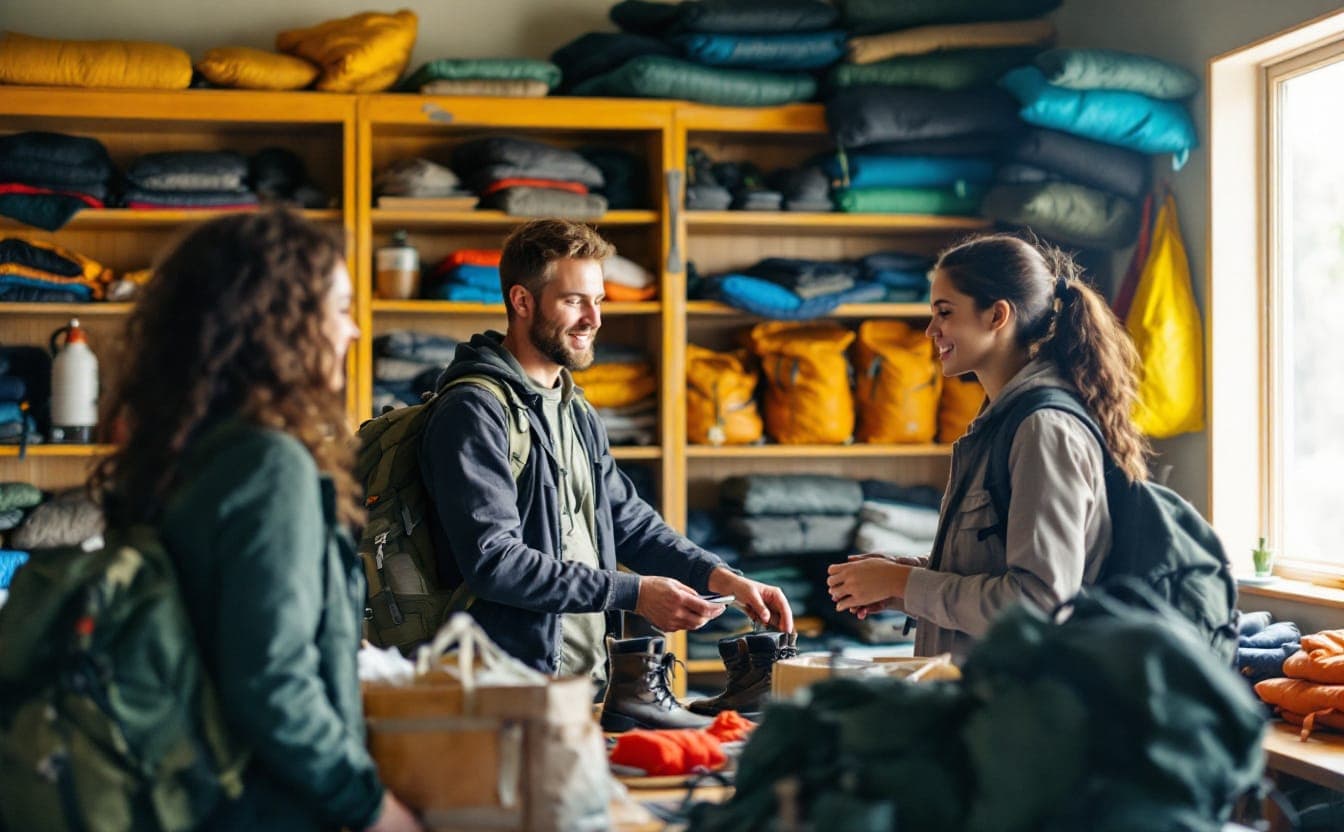
A full day kit bought new adds up fast, and most first hikes don't need any of it to be new. Many public libraries now lend daypacks, binoculars and park passes. Parks departments and outdoor clubs lend trekking poles, rain shells and snowshoes. Our guide to gear libraries explains where to look and what they usually stock.
Things worth borrowing first: the daypack, trekking poles, a rain shell, a water filter and anything for winter. Things worth owning early, because fit and hygiene matter: socks, a first-aid kit you've packed yourself, a water bottle and a headlamp. Thrift stores are full of wool sweaters and polyester fleece that make good warm layers for a few dollars.
Before you walk out the door
The last step is telling someone where you're going. Text a friend or family member the trail name, where you're starting (the parking lot or the stop), your planned route, and a time after which they should call for help. If you're late, they call 911 or the park; they don't drive out to look.
Then run the short list: check the forecast and the park's alerts page for closures or fire restrictions, charge the phone and download the map, fill the water, and pick a turnaround time you'll respect even if the summit is close. A hike you turn back from is still a good hike, and you'll know exactly what to pack for the next one.
Next: try the Hiking Time Calculator or browse the full Pack list.