

Why Diversity Work Matters in Land Conservation
In 2007 the Yale School of Forestry & Environmental Studies published Diversity and the Future of the U.S. Environmental Movement, a collection of essays edited by Emily Enderle. Felicia Marcus contributed as an executive with a large organization to run. Her essay, "A Personal View on the Importance and Imperative of Diversity Work," is frank and still useful to anyone in land conservation. This page explains who she is, summarizes the essay's main themes in our own words, and considers what has changed since and what land trusts can take from it today. For the full argument, read the essay itself.
The essay and its author
When the essay appeared, Marcus was executive vice-president and chief operating officer of The Trust for Public Land, the national nonprofit known for protecting land for people, including city parks, gardens and trails as well as larger landscapes. Before that she had served as president of the Board of Public Works for the City of Los Angeles, and then, from 1993 to 2001, as regional administrator of the U.S. Environmental Protection Agency's Region 9, which covers California, Arizona, Nevada, Hawaii, the Pacific territories and many tribal nations. She later worked as Western director of the Natural Resources Defense Council and went on to chair California's State Water Resources Control Board.
That background matters. Marcus was not an outside critic. She had managed large public agencies and a national conservation organization, and, as its title says, the essay is a personal view written from that vantage point.
Years of talk
One theme of the essay is a frustration many readers will recognize: the conservation movement had been talking about diversity for a long time, through meetings, statements and good intentions, without much change in who worked in and led its organizations.
Our reading: talk can become a substitute for action because it feels like progress and costs little. Without goals, budgets and someone accountable, a conversation about diversity can run for years without changing a single hiring decision. Seven years after the essay, Dorceta Taylor's 2014 study for Green 2.0 put numbers to the problem, finding that people of color held no more than about 16 percent of staff and board positions in the institutions surveyed. Our reports page explains that study.
Why hires leave
Marcus also takes up an uncomfortable pattern: organizations that did hire people of color often saw them leave.
This is worth dwelling on because the usual response is to blame the pipeline or the individual. Later research and practitioner experience point instead to the conditions people walk into: being the only person of color on a team, being asked to represent a whole community, having little authority or support, and seeing no path to promotion. When hires leave, the useful question is what the organization asked of them and what it offered in return.
Relevance and survival
A central argument of the essay is that a serious approach to diversity is essential to the conservation movement's relevance. In our words: a movement that does not reflect the country will struggle to keep the country's support.
For land trusts this is concrete. They depend on voters to pass open-space measures, on local officials for zoning and funding, and on residents to volunteer, donate and speak up at hearings. As the population changes, an organization that looks and thinks the way it did decades ago will find each of those relationships harder to sustain.
Lessons from Los Angeles
Marcus draws on her years in Los Angeles city government, one of the most diverse public settings in the country, for lessons about working across differences of race, language and neighborhood.
Our reading of why this matters: a city agency cannot choose its public. It has to serve every neighborhood, hold hearings people can understand, and answer to elected officials from very different districts. Conservation organizations, by contrast, can choose whom to serve and often default to people who already share their outlook. The habits a public agency builds out of necessity, such as interpretation at meetings, working through local groups and showing up in neighborhoods, are ones conservation organizations can adopt by choice.
Parks and gardens count
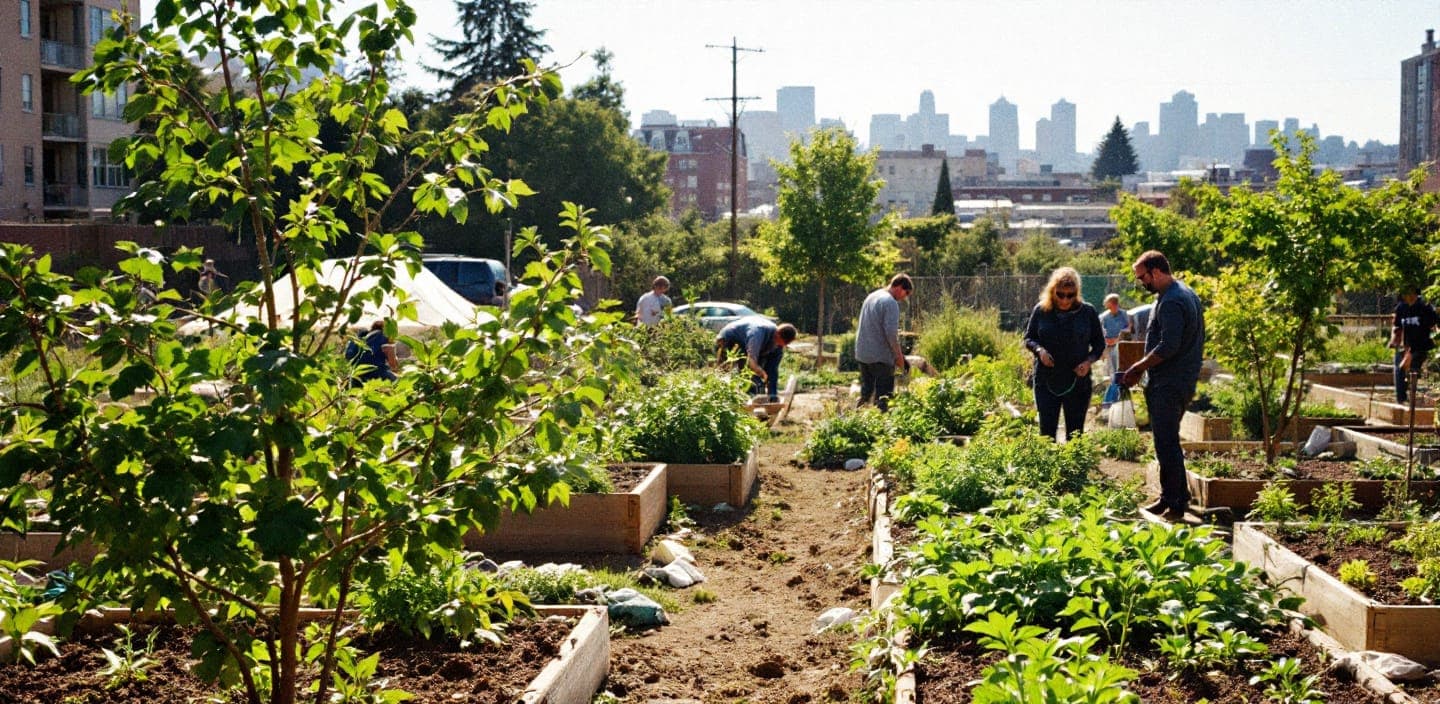
The essay makes the case that city parks and community gardens are part of conservation, not a lesser cousin of it. This fits the mission of the organization Marcus helped lead, which has long worked to protect land close to where people live.
The point remains contested in some quarters. Many land trusts still rank projects mainly by acreage, ecological rarity or scenic value, criteria that steer resources away from cities and toward places most people rarely visit. Treating a community garden or a neighborhood creek as conservation changes who benefits from the work and who sees it as theirs.
Generations and first steps
Marcus also raises generational diversity: making room for younger people in a movement whose leadership was, and in many places still is, older. Diversity of age and diversity of race often overlap, since younger Americans are more racially diverse than older ones.
The essay also describes one organization's early efforts as an example of how to begin. We will not retell the details here; readers should go to the original. The general lesson we take from it is that beginning matters more than having a perfect plan, provided the beginning comes with commitment from leadership and a willingness to keep going.
The years since
A good deal has moved since the essay was published.
- Data. Green 2.0's push for public disclosure, starting with Taylor's 2014 study, made it possible to track staff and board diversity across the sector.
- Parks access. In 2017 The Trust for Public Land, the National Recreation and Park Association and the Urban Land Institute launched the 10-Minute Walk campaign, setting a goal of a park within a ten-minute walk of every city resident.
- Community conservation. The Land Trust Alliance and many state associations now promote conservation shaped by community needs, alongside traditional land protection.
- New groups. Outdoor Afro, Latino Outdoors and many other groups have built their own networks for getting communities of color outdoors.
- Land return. Transfers of land to tribes, sometimes with land trusts as partners, have become far more common.
- Federal retreat. In 2025 the federal government cut back many environmental-justice and diversity programs, shifting more of the burden to states, philanthropy and organizations themselves.
What has not changed as much is the makeup of leadership at many conservation organizations, and the tendency to treat diversity as a project for a few staff rather than a responsibility for everyone.
Takeaways for land trusts
- Set goals and assign responsibility. Decide what you want to change, by when, and who answers for it. Report progress to your board.
- Look at why people leave. Conduct exit interviews, track retention by role, and fix what you find before hiring more.
- Widen your selection criteria. Give weight to community need, access and cultural value, not only acreage and rarity.
- Learn from public agencies. Interpretation, evening meetings, local partners and a presence in neighborhoods are habits you can adopt.
- Make room for younger leaders. Put early-career staff on decision-making teams and boards, not only on committees.
- Start, and keep going. A modest first step with leadership behind it is worth more than a perfect plan that never leaves the board room.
For a practical checklist, see our brief on diversifying conservation. For further reading, including Taylor, Finney and Bullard, see our resources page.